What is a Mortgage Pre-Approval Letter? Your Homebuying Edge
mortgage pre-approval letter

What is a Mortgage Pre-Approval Letter? Your Homebuying Edge

Unlock the door to your dream home with this essential document, proving your financial readiness to sellers.

Get Pre-Approved Now

Key Takeaways

  • ✓ A mortgage pre-approval letter is a conditional offer from a lender stating how much they are willing to lend you.
  • ✓ It's based on a thorough review of your credit, income, and assets, unlike a pre-qualification.
  • ✓ Pre-approval significantly strengthens your offer to sellers, showing you're a serious and qualified buyer.
  • ✓ The letter typically expires after 60-90 days, requiring re-evaluation if you haven't found a home.

How It Works

1
Gather Your Financial Documents

Collect pay stubs, W-2s, bank statements, and tax returns. This information helps the lender assess your financial stability.

2
Submit Application to a Lender

Apply with a mortgage lender, providing all required documents. They will also run a hard credit inquiry to review your credit history.

3
Lender Reviews and Issues Letter

The lender underwrites your financial profile. If approved, they issue a pre-approval letter specifying the loan amount and terms.

4
Present Letter with Your Offer

Once you find a home, your real estate agent will include the pre-approval letter with your purchase offer. This demonstrates your buying power.

Understanding the Mortgage Pre-Approval Letter and Its Value

A lawyer's desk featuring a justice statue, diploma, laptop, magnifying glass, and documents. Photo: Pavel Danilyuk / Pexels
In the competitive landscape of the US real estate market, understanding what is a mortgage pre-approval letter is not just beneficial, it's often essential. This document serves as a conditional commitment from a lender, indicating that they are willing to lend you a specific amount of money to purchase a home, subject to certain conditions like a satisfactory property appraisal. Unlike a simple pre-qualification, which is often a quick, informal estimate based on self-reported information, a pre-approval involves a comprehensive review of your financial standing. This includes a deep dive into your credit report, income, employment history, and existing debts. The lender will verify your W-2s, pay stubs, bank statements, and tax returns, providing a much more concrete assessment of your borrowing capacity. This thorough vetting process is precisely what gives the pre-approval letter its significant weight. For homebuyers, possessing a pre-approval letter transforms you from a speculative browser into a serious, qualified buyer. Imagine you've found your dream home, and so have several other prospective buyers. When a seller receives multiple offers, the one accompanied by a robust pre-approval letter often stands out. It signals to the seller that your financing is largely secured, reducing the risk of the deal falling through due to loan approval issues. This can be a decisive factor, especially in hot markets where sellers prioritize certainty and a smooth closing. Furthermore, a pre-approval letter helps you, the buyer, establish a realistic budget. It clearly defines your maximum purchasing power, preventing you from falling in love with homes outside your financial reach. This clarity saves time, reduces emotional stress, and streamlines your home search, allowing you to focus on properties that truly fit your budget. It also empowers you to act quickly when the right property emerges, as you've already completed a significant portion of the financial heavy lifting. Without this critical document, you might find yourself scrambling to get your finances in order, potentially missing out on desirable properties that receive swift, pre-approved offers. The process also helps you identify and address any potential credit issues or financial discrepancies before you're deep into the home-buying process, giving you time to rectify them. This proactive approach can prevent delays and complications down the line, ensuring a smoother journey to homeownership. Understanding your financial limits upfront is key to a successful home search and a stress-free closing. You can learn more about the broader home buying process by checking out our guide on navigating the real estate market. This foundational knowledge will set you up for success.

The Detailed Process: How to Secure Your Mortgage Pre-Approval
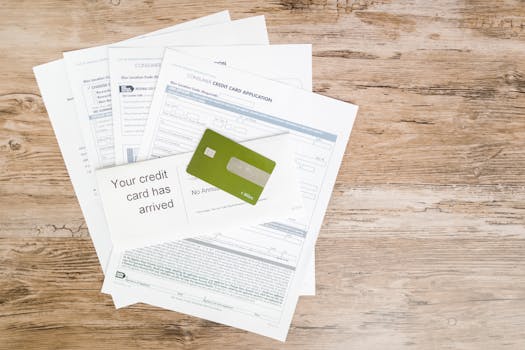
Top view of credit card and application documents on wooden surface. Photo: RDNE Stock project / Pexels
Securing a mortgage pre-approval letter is a structured process that, while requiring some effort, lays the groundwork for a successful home purchase. It begins with gathering a comprehensive set of financial documents. You'll need recent pay stubs (typically for the last 30-60 days), W-2 forms from the past two years, federal tax returns for the same period, and bank statements (usually for the last two months) for all checking and savings accounts. If you have any other significant assets, such as investment accounts or retirement funds, statements for these will also be required. Additionally, be prepared to provide information regarding any outstanding debts, including student loans, car loans, and credit card balances. The lender will use these documents to verify your income, employment stability, and asset base. Once your documents are in order, the next step is to apply with a mortgage lender. This could be a bank, credit union, or an independent mortgage broker. During the application, the lender will perform a 'hard inquiry' on your credit report. This is a crucial step as it allows them to assess your creditworthiness, payment history, and overall debt-to-income ratio. A hard inquiry will typically cause a small, temporary dip in your credit score, but its impact is usually minimal and short-lived. It's important to note that multiple hard inquiries for mortgage shopping within a short period (typically 14-45 days, depending on the credit scoring model) are often grouped as a single inquiry, so don't hesitate to shop around for the best rates and terms. The lender will then analyze all the information you've provided, including your credit profile, to determine the maximum loan amount you qualify for and the potential interest rate. This evaluation includes calculating your debt-to-income (DTI) ratio, which compares your monthly debt payments to your gross monthly income, a key metric for lenders. If your financial profile meets the lender's criteria, they will issue a pre-approval letter. This letter will clearly state the maximum loan amount you're approved for, the type of loan (e.g., conventional, FHA, VA), and often an estimated interest rate. It will also specify any conditions that still need to be met before final loan approval, such as a satisfactory home appraisal or title search. It's vital to read this letter carefully and understand its terms. Remember, a pre-approval is not a guarantee of a loan; it's a conditional offer. The final loan approval is contingent upon the specific property you choose, its appraisal value, and no significant changes to your financial situation between pre-approval and closing. This meticulous process ensures that when you make an offer on a home, you do so with confidence, knowing your financial backing is solid.

Distinguishing Pre-Qualification from Pre-Approval and Beyond

African American man holding envelope emphasizing credit card debt relief options. Photo: RDNE Stock project / Pexels
It's common for first-time homebuyers to confuse a mortgage pre-qualification with a mortgage pre-approval, but understanding the significant differences between the two is paramount for a smooth home-buying journey. A pre-qualification is a preliminary step, often involving a brief conversation with a lender or an online questionnaire where you provide self-reported financial information. The lender then gives you an estimate of how much you might be able to borrow based on these unverified details. This process typically involves a 'soft credit pull,' which does not impact your credit score. While a pre-qualification can give you a rough idea of your purchasing power, it holds very little weight with sellers or real estate agents because your financial information has not been verified. It's best used as an initial gauge to see if homeownership is within your financial reach. In contrast, a pre-approval is a much more rigorous and credible process, as detailed previously. It involves a thorough verification of your income, assets, and credit history by the lender, including a 'hard credit pull.' The resulting pre-approval letter is a conditional commitment to lend, making it a powerful tool in your home search. It tells sellers and their agents that you are a serious, financially capable buyer who has gone through significant financial scrutiny. This distinction can be the difference between your offer being accepted or overlooked in a competitive market. Beyond pre-approval, the next stage in the mortgage process is the full loan commitment, which occurs after a specific property has been identified, appraised, and all conditions of the pre-approval have been met. At this stage, the lender is ready to finalize the loan and disburse funds. Another crucial aspect to consider is the validity period of a pre-approval letter. Most pre-approval letters are valid for 60 to 90 days. This timeframe is designed to reflect the dynamic nature of financial markets and your personal financial situation. If you haven't found a home within this period, you'll need to work with your lender to renew your pre-approval. This often involves updating your financial documents and potentially another credit check to ensure your financial standing hasn't changed significantly. Maintaining an active pre-approval throughout your home search is crucial. Additionally, it's wise to get pre-approved before you even start seriously looking at homes. This proactive step ensures you know your budget upfront and can act decisively when you find the right property. Many real estate agents also prefer to work with pre-approved buyers, as it assures them that their time is being spent with genuinely qualified prospects. Having this document ready means you can move swiftly from viewing a property to making a competitive offer. Understanding these stages and distinctions can greatly simplify your home-buying journey and empower you to make informed decisions. For further insights into the lending process, consider exploring resources on securing favorable loan terms.

Common Mistakes to Avoid and Tips for a Strong Pre-Approval

Tax preparation setup with documents, smartphone calculator, and checklist. Photo: Leeloo The First / Pexels
Navigating the pre-approval process can be straightforward if you avoid common pitfalls. Here are some crucial mistakes to steer clear of and tips to ensure your pre-approval is as strong as possible: * **Don't make major financial changes:** After getting pre-approved, avoid opening new credit accounts, taking out new loans, or making large purchases (like a car or furniture on credit) until after your home loan closes. Any significant change to your debt-to-income ratio or credit profile can jeopardize your final loan approval. * **Don't change jobs:** Lenders look for stability in employment. Changing jobs, especially to a different industry or a commission-based role, can raise red flags and delay or even derail your loan. * **Don't ignore the expiration date:** Pre-approval letters have a shelf life, typically 60-90 days. If you haven't found a home within this period, proactively work with your lender to renew your pre-approval. This often involves updating your financial documents and potentially another credit check. * **Don't apply with too many lenders at once:** While shopping for rates is smart, limit hard inquiries within a short period to avoid unnecessary credit score dips. Most credit bureaus group mortgage inquiries within a specific window, but too many spread out can be detrimental. * **Don't misrepresent your financial situation:** Be honest and accurate with all information provided to your lender. Discrepancies can lead to delays or even denial of your loan application. **Tips for a Stronger Pre-Approval:** * **Improve your credit score:** Before applying, take steps to boost your credit score. Pay down debts, pay bills on time, and correct any errors on your credit report. A higher score often translates to better interest rates. * **Save more for a down payment:** A larger down payment can reduce your loan amount, lower your monthly payments, and make you a more attractive borrower to lenders. * **Reduce existing debt:** Lowering your debt-to-income ratio by paying off credit card balances or other loans can significantly strengthen your pre-approval. * **Maintain stable employment:** A consistent work history with a reliable income source is a key factor for lenders. * **Organize your documents:** Having all required financial documents readily available will streamline the application process and demonstrate your preparedness. * **Communicate openly with your lender:** If your financial situation changes, inform your lender immediately. Transparency is key to avoiding last-minute surprises. By following these guidelines, you can significantly enhance your chances of securing a robust pre-approval that positions you as a highly desirable buyer in the housing market.

Comparison

FeatureMortgage Pre-ApprovalMortgage Pre-QualificationFull Loan Commitment
Financial ReviewThorough (verified docs, hard credit pull)Basic (self-reported, soft credit pull)Complete (all conditions met)
Lender's CommitmentConditional offer to lendEstimate of borrowing powerFinal agreement to lend
Impact on Credit ScoreMinor, temporary dipNoneNone (after initial hard pull)
Seller's PerceptionStrong, serious buyerWeak, unverified buyerDeal is closed
Documents RequiredExtensive (W-2s, pay stubs, bank statements, tax returns)Minimal (income estimate, debt estimate)All pre-approval docs + property-specific docs
Validity Period60-90 daysNo formal expirationUntil closing
Confidence in BudgetHighLowAbsolute

What Readers Say

"Getting our mortgage pre-approval letter was a game-changer. Our agent said it made our offer stand out in a multiple-offer situation, and we got the house! It made us feel so much more confident."

Sarah J. · Austin, TX

"I thought pre-qualification was enough, but my agent insisted on a pre-approval. The process was thorough, but knowing exactly what I could afford saved me so much time and stress. Highly recommend!"

David L. · Orlando, FL

"Thanks to our strong pre-approval letter, we were able to close on our dream home in just 30 days. The seller appreciated our readiness, and it gave us a competitive edge we needed."

Maria G. · Seattle, WA

"The pre-approval process was a bit more involved than I anticipated with all the paperwork, but the peace of mind it provided was invaluable. It definitely made our home search more focused."

Mark S. · Denver, CO

"As a first-time homebuyer, I was overwhelmed. My lender walked me through what is a mortgage pre-approval letter, step-by-step. It clarified my budget and made me feel empowered when making an offer."

Jessica R. · Boston, MA

Frequently Asked Questions

What documents do I need for a mortgage pre-approval letter?

You'll typically need recent pay stubs, W-2 forms for the past two years, federal tax returns for the past two years, bank statements for the last two months, and statements for any investment or retirement accounts. Lenders also review your credit report and employment history.

Will getting pre-approved hurt my credit score?

Yes, a mortgage pre-approval involves a 'hard inquiry' on your credit report, which can cause a small, temporary dip in your credit score. However, credit scoring models typically allow for multiple mortgage inquiries within a short period (usually 14-45 days) to be counted as a single inquiry, minimizing the overall impact.

How long does a mortgage pre-approval letter last?

Most mortgage pre-approval letters are valid for 60 to 90 days. This timeframe allows for market fluctuations and changes in your financial situation. If you haven't found a home within this period, you'll need to work with your lender to renew or update your pre-approval.

How much does it cost to get a mortgage pre-approval?

Generally, there is no direct fee charged by lenders for a mortgage pre-approval itself. However, the process involves a credit check, for which some lenders might pass on a small fee, though this is rare. The primary 'cost' is the time and effort required to gather your financial documents.

Is a mortgage pre-approval the same as being approved for a loan?

No, a mortgage pre-approval is a conditional offer to lend, not a final loan approval. It means you meet the lender's criteria based on your financial documents. Final loan approval is contingent upon finding a suitable property, a satisfactory appraisal, and no significant changes to your financial situation before closing.

Who should get a mortgage pre-approval letter?

Anyone serious about buying a home should get a mortgage pre-approval letter. It provides a clear budget, strengthens your offer to sellers, and streamlines the home-buying process by addressing financial qualifications upfront, making you a more competitive and confident buyer.

What if my financial situation changes after pre-approval?

It is crucial to inform your lender immediately if your financial situation changes significantly after receiving pre-approval. This includes changes in employment, income, or taking on new debt. Such changes can impact your loan eligibility and may require your pre-approval to be re-evaluated.

What's the future trend for mortgage pre-approvals?

The trend is towards increasingly digital and streamlined pre-approval processes, leveraging online portals and automated document verification. While the core requirements remain, technology aims to make the experience faster and more convenient for homebuyers, enhancing efficiency in a dynamic market.

Don't navigate the complex US housing market without your strongest asset. Understand what is a mortgage pre-approval letter, secure yours today, and step confidently into your home search. Start your pre-approval journey now and unlock the door to your dream home.

Topics: mortgage pre-approval letterhome loan pre-approvalmortgage approval processbuying a housereal estate financing
Leo List

IE Escorts NO Escorts US Escorts NZ Escorts AU Escorts
Brampton weed
Adultwork EstrelaBet Vai de Bet R7 Bet Betão Galera Bet Rainbet Bet9ja Shop SportyBet BetKing Sisal Loto Foot Hollywoodbets YesPlay Odibets RushBet Jugabet BetWarrior BetCity MSport betPawa Fortebet