What is a Good Cap Rate for Real Estate? Your Guide
what is a good cap rate for real estate

What is a Good Cap Rate for Real Estate? Your Guide

Master cap rate analysis to make smarter real estate investment decisions and maximize your portfolio's potential.

Calculate Your Cap Rate Now

Key Takeaways

  • ✓ Cap rate (capitalization rate) is a fundamental metric in real estate investment, representing the unleveraged rate of return on a property.
  • ✓ It's calculated by dividing a property's Net Operating Income (NOI) by its current market value or purchase price.
  • ✓ A 'good' cap rate is relative and depends heavily on property type, location, market conditions, and investor risk tolerance.
  • ✓ Higher cap rates generally indicate higher risk or potential for higher returns, while lower cap rates often suggest lower risk or premium properties.
  • ✓ Cap rates are primarily used for income-generating properties, not typically for owner-occupied residential homes.

How It Works

1
Understand Net Operating Income (NOI)

NOI is a property's annual income after deducting all operating expenses, but before debt service and income taxes. It's the core component for calculating cap rate.

2
Determine Property Value or Price

This can be the purchase price of a property you're considering or an estimated market value for an existing asset. Accuracy here is crucial for a meaningful cap rate.

3
Calculate the Cap Rate

Divide the NOI by the property's value or purchase price, then multiply by 100 to express it as a percentage. Cap Rate = (NOI / Property Value) * 100.

4
Interpret and Compare

Analyze the calculated cap rate in the context of comparable properties in the same market, property type, and economic conditions. This helps determine if it's 'good'.

Demystifying the Capitalization Rate: The Foundation
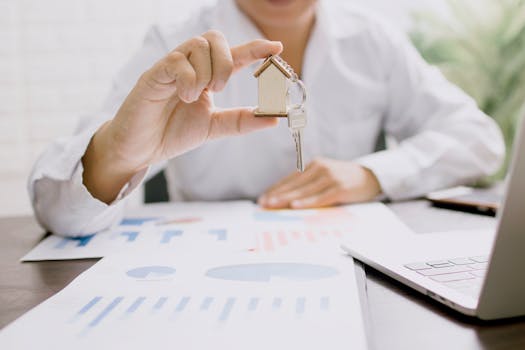
Real estate professional presenting a house model with keys, symbolizing property investment and ownership. Photo: Khwanchai Phanthong / Pexels
The capitalization rate, universally abbreviated as cap rate, stands as one of the most pivotal metrics in the realm of real estate investment analysis. For both seasoned investors and eager newcomers, understanding what is a good cap rate for real estate is paramount to making informed decisions and assessing the potential profitability of an income-generating property. At its core, the cap rate is a measure of the natural yield of a property, akin to the unleveraged rate of return. It essentially tells you how much income a property is expected to generate relative to its purchase price or market value, assuming a cash purchase without the influence of financing. This makes it an incredibly useful tool for comparing different investment opportunities on an 'apples-to-apples' basis, stripping away the complexities of individual financing structures. The formula for calculating the cap rate is deceptively simple: Cap Rate = Net Operating Income (NOI) / Current Market Value or Purchase Price. However, the true art lies in accurately determining these two critical components. Net Operating Income (NOI) is the property's annual gross income minus all operating expenses. It's crucial to understand what goes into NOI and, perhaps more importantly, what does not. Gross income includes all revenue generated by the property, such as rental income, parking fees, laundry income, and other ancillary revenues. From this, you subtract legitimate operating expenses, which encompass property taxes, insurance, property management fees, utilities (if the landlord pays them), maintenance, repairs, and reserves for replacements (capital expenditures). What is explicitly excluded from NOI are debt service (mortgage payments), depreciation, and income taxes. These are considered investor-specific expenses or non-cash expenses that do not reflect the property's operational efficiency. A common pitfall is to include debt service, which would artificially depress the 'return' and misrepresent the property's intrinsic income-generating capacity. The 'Current Market Value or Purchase Price' component is equally vital. For a property you are considering buying, this would be the agreed-upon purchase price. For a property you already own or are evaluating for sale, it would be its estimated fair market value, often derived from comparable sales or professional appraisals. The integrity of your cap rate calculation hinges entirely on the accuracy and realism of both your NOI projections and your property valuation. Overestimating income or underestimating expenses will result in an inflated cap rate, leading to potentially poor investment decisions. Conversely, being overly conservative might cause you to miss out on genuinely good opportunities. Therefore, diligent due diligence in gathering financial data and market comparables is non-negotiable. The cap rate provides a quick snapshot, a rule of thumb, but it is the foundation upon which more complex analyses, such as discounted cash flow (DCF) or internal rate of return (IRR), are built. It serves as an initial filter, allowing investors to quickly identify properties that align with their return expectations before diving into deeper financial modeling. Understanding real estate fundamentals is key to mastering cap rate analysis.

Context is King: What Shapes a 'Good' Cap Rate in the US?

A stunning view of the Brooklyn Bridge and New York City's skyline at sunset. Photo: Federico Abis / Pexels
Defining what is a good cap rate for real estate is not a universal constant; it's a dynamic figure heavily influenced by a multitude of market-specific and property-specific factors. There's no single magic number that applies across the board. Instead, a 'good' cap rate is one that aligns with an investor's risk tolerance, return objectives, and the prevailing market conditions for a specific asset class in a particular geographic region within the United States. Ignoring these contextual elements can lead to misinterpretations and potentially costly investment mistakes. Firstly, property type plays a monumental role. Commercial real estate encompasses a broad spectrum, including multifamily (apartments), industrial (warehouses, manufacturing), retail (shopping centers, storefronts), office buildings, and specialized properties like hotels or medical facilities. Each of these asset classes has inherently different risk profiles, tenant bases, lease structures, and operational complexities, which directly impact their typical cap rates. For example, a stable, fully-leased multifamily property in a prime urban location might command a lower cap rate (e.g., 4-6%) because it's perceived as lower risk and more liquid. Conversely, a retail center with several vacant units in a secondary market might trade at a higher cap rate (e.g., 8-10%+) to compensate investors for the increased risk of lease-up and potential tenant churn. Industrial properties, often characterized by long-term leases with creditworthy tenants, tend to fall somewhere in between, with cap rates varying significantly based on location and tenant quality. Secondly, geographic location is paramount. Real estate is inherently local. A 6% cap rate might be considered excellent in a highly competitive, desirable market like New York City or San Francisco, where property values are high and appreciation potential is strong, but rental yields are comparatively lower. The same 6% cap rate might be seen as mediocre or even poor in a less robust, secondary market in the Midwest, where investors expect higher yields to offset potentially slower growth or higher vacancy risks. Factors like population growth, job creation, infrastructure development, and local economic stability all contribute to a market's attractiveness and, consequently, its prevailing cap rates. Tier 1 markets (major metropolitan areas) typically have lower cap rates due to higher demand and lower perceived risk, while Tier 2 and Tier 3 markets often offer higher cap rates to entice investors to take on slightly more risk or invest in areas with less established growth trajectories. Thirdly, the overall economic climate and interest rate environment significantly impact cap rates. When interest rates are low, the cost of borrowing capital is cheaper, which can drive up property values and compress cap rates (make them lower). Investors are willing to accept lower yields because their cost of capital is also lower. Conversely, when interest rates rise, borrowing becomes more expensive, which can put downward pressure on property values and lead to higher cap rates. During periods of economic uncertainty or recession, cap rates tend to rise as investors demand higher returns to compensate for increased risk and potential vacancies. Inflation also plays a role; while it can push up property values, it can also increase operating costs, impacting NOI. Understanding these macro and micro economic forces is essential for interpreting any given cap rate. An investor's individual risk tolerance is the final, subjective piece of the puzzle. Some investors prioritize stable, lower-risk income streams (lower cap rates), while others are willing to chase higher returns with higher risk (higher cap rates) for potential greater upside. It's a personal decision that must align with one's investment strategy. Always compare the property's cap rate to recently sold, similar properties in the immediate vicinity to truly gauge its relative value.

Analyzing Cap Rate Trends and Investor Expectations

Close-up of a red home for sale sign against a wooden backdrop, ideal for real estate use. Photo: Thirdman / Pexels
Beyond merely understanding the calculation and contextual factors, a sophisticated investor must also pay close attention to cap rate trends within specific markets and property types. Cap rates are not static; they fluctuate over time in response to economic cycles, investor sentiment, and shifts in supply and demand. Analyzing these trends can provide invaluable insights into market conditions and future expectations. For instance, if cap rates for a particular asset class in a given city have been steadily declining over several years, it suggests increasing demand, higher property valuations, and potentially a more competitive market for acquisitions. Conversely, rising cap rates could indicate a softening market, increased perceived risk, or an oversupply of properties, presenting opportunities for buyers to negotiate better deals. Investors often look at the 'spread' between cap rates and the cost of debt. A healthy spread means that the property's unleveraged return (cap rate) is significantly higher than the interest rate on a mortgage, allowing for positive leverage and enhanced cash-on-cash returns. When this spread narrows, or even inverts, it signals a more challenging investment environment where financing costs eat into or even exceed property yields. This is particularly relevant in periods of rising interest rates, as seen in recent economic cycles. Savvy investors continually monitor these spreads to adjust their acquisition strategies and return expectations. Furthermore, different investor profiles have varying cap rate expectations. Institutional investors, such as pension funds and REITs, often target core or core-plus assets in primary markets, accepting lower cap rates (e.g., 3-5%) due to the perceived stability, liquidity, and long-term appreciation potential. These investors prioritize capital preservation and consistent, albeit lower, income streams. Learn more about real estate investment strategies for different investor types. Private investors or opportunistic funds, on the other hand, might actively seek value-add or distressed properties in secondary or tertiary markets that offer higher cap rates (e.g., 7-10%+) but come with greater operational risk or the need for significant capital improvements. Their strategy is to acquire at a high cap rate, improve the property's NOI through renovations, re-leasing, or better management, and then potentially sell at a lower, more stabilized cap rate for a substantial profit. This highlights that a 'good' cap rate is not just about the number itself, but about how it fits into a broader investment thesis and risk-adjusted return profile. It's also critical to distinguish between 'going-in cap rate' (based on the purchase price and current NOI) and 'exit cap rate' (the projected cap rate at which the property might be sold in the future). The exit cap rate is a crucial assumption in determining an investment's overall internal rate of return (IRR) and can significantly impact projected profitability. A lower exit cap rate relative to the going-in cap rate implies an expectation of future value appreciation, while a higher exit cap rate suggests a potential decline in value or a more difficult selling environment. Understanding and forecasting these trends, alongside a thorough due diligence process, empowers investors to make more robust and profitable real estate decisions in the competitive US market.

Common Pitfalls and Best Practices in Cap Rate Usage

Hands of an architect analyzing blueprints and financial graphs at a desk. Photo: Gustavo Fring / Pexels
While the cap rate is a powerful tool, its simplicity can also be its downfall if not used correctly. Misinterpreting or miscalculating cap rates is a common pitfall that can lead to flawed investment decisions. One of the most frequent mistakes is using a property's gross income instead of Net Operating Income (NOI). Gross income doesn't account for essential operating expenses like property taxes, insurance, and maintenance, which are critical to assessing a property's true profitability. Always ensure you are working with a meticulously calculated NOI. Another error is comparing cap rates across vastly different property types or markets without proper adjustment. A 5% cap rate for a Class A office building in Manhattan is fundamentally different from a 5% cap rate for a rural mobile home park, even if the number is the same. The underlying risk, appreciation potential, and liquidity are entirely disparate. Always compare apples to apples – or at least, understand the differences between the fruits you're comparing. Furthermore, relying solely on cap rates without considering other financial metrics like cash-on-cash return, internal rate of return (IRR), and debt coverage ratio (DCR) can be dangerous. The cap rate provides an unleveraged return, but most investors use financing. The cash-on-cash return gives a clearer picture of your actual annual return on the cash you've invested, taking debt service into account. IRR provides a more comprehensive view of the total return over the investment's lifespan, considering the time value of money. Here are some best practices for utilizing cap rates effectively: * **Verify NOI Diligently:** Always request and scrutinize a property's operating statements (T-12s - trailing 12 months) and rent rolls. Look for unusual expenses, deferred maintenance, or inflated income projections. Be conservative in your own projections, especially for vacancies and operating expenses. * **Research Comparable Sales:** Don't just rely on advertised cap rates. Research recent sales of similar properties in the same submarket to establish a realistic range of cap rates. Public records, broker reports, and commercial real estate data providers can be invaluable resources. * **Factor in Growth Potential:** While the cap rate is a snapshot of current income, consider the property's potential for future NOI growth. Can rents be increased? Are expenses unusually high and can be reduced with better management? This 'value-add' potential isn't directly reflected in the initial cap rate but is crucial for long-term returns. * **Understand Your Risk Tolerance:** A 'good' cap rate is subjective. What one investor considers acceptable risk for a higher return, another might find too risky. Align the cap rate with your personal or institutional investment objectives and risk profile. * **Consider Exit Strategy:** Think about the exit cap rate. What do you realistically expect to sell the property for in the future? This forward-looking perspective helps in assessing the total return potential beyond just annual income. A property bought at a 7% cap rate might be sold at a 6% cap rate if the market improves, signifying capital appreciation. * **Don't Forget Capital Expenditures (CapEx):** While CapEx is typically added back to NOI for the calculation, it's essential to budget for it. Significant upcoming repairs or renovations can eat into your actual cash flow, even if the calculated cap rate looks appealing. Always conduct a thorough property inspection and get professional opinions on necessary future capital outlays. By avoiding these common pitfalls and adhering to best practices, investors can leverage the cap rate as a robust analytical tool, making more confident and profitable real estate investment decisions.

Comparison

FeatureHigh Cap Rate (e.g., 8-10%)Medium Cap Rate (e.g., 6-7%)Low Cap Rate (e.g., 3-5%)
Perceived RiskHigher (e.g., secondary market, value-add, older asset)Moderate (e.g., stable secondary, emerging primary)Lower (e.g., prime location, credit tenants, new asset)
Potential ReturnHigher cash flow, potential for forced appreciationBalanced cash flow & appreciation potentialLower initial cash flow, strong appreciation potential
Market TypeSecondary/Tertiary Markets, distressed assetsGrowth Markets, stable secondary citiesPrimary/Tier 1 Markets, highly desirable locations
Investor ProfileOpportunistic, Value-Add, Higher Risk ToleranceCore-Plus, Growth-OrientedCore, Institutional, Capital Preservation

What Readers Say

"This article finally clarified what is a good cap rate for real estate! I was struggling to understand why some properties with lower cap rates were still considered good investments, and the explanation about market context was incredibly helpful for my Austin portfolio."

Sarah J. · Austin, TX

"As a new investor, I appreciated the detailed breakdown of NOI and the common pitfalls. Knowing what to exclude from NOI is critical, and this guide saved me from making a big mistake in my initial calculations for a Miami condo building."

Mark D. · Miami, FL

"The comparison table is a brilliant addition! It clearly illustrates the differences between low, medium, and high cap rates, which helps me categorize potential Denver investments much faster and more accurately. My deal analysis is already much more efficient."

Emily R. · Denver, CO

"Excellent depth on the subject. While I wish there were more specific cap rate ranges for different Chicago neighborhoods, the principles outlined about property type and economic factors are spot on and invaluable for my commercial acquisitions."

David L. · Chicago, IL

"This content is premium! The section on analyzing cap rate trends and investor expectations provided a sophisticated perspective I hadn't found elsewhere. It's truly helped me understand the 'why' behind Seattle's sometimes lower cap rates."

Jessica M. · Seattle, WA

Frequently Asked Questions

What is the average cap rate for real estate in the US?

The average cap rate in the US varies significantly by property type and market. Generally, for commercial properties, core markets might see cap rates in the 3-6% range, while secondary or tertiary markets could range from 6-9% or higher. It's crucial to research averages for your specific property type and location, as a national average can be misleading due to market diversity.

Is a higher or lower cap rate better for an investor?

Neither is inherently 'better'; it depends on your investment strategy and risk tolerance. A higher cap rate typically indicates a higher potential return but often comes with higher risk (e.g., older property, less stable market). A lower cap rate usually suggests lower risk, a more stable asset, or a prime location with strong appreciation potential, but offers lower initial cash flow.

How do I calculate Net Operating Income (NOI) accurately?

To calculate NOI, start with the property's total annual gross income (rental income, other fees). From this, subtract all operating expenses, including property taxes, insurance, utilities (if landlord-paid), maintenance, repairs, and property management fees. Do NOT subtract mortgage payments (debt service), depreciation, or income taxes, as these are not considered operating expenses.

Does cap rate account for financing or mortgage payments?

No, the traditional cap rate calculation explicitly excludes financing costs like mortgage payments (debt service). It represents the unleveraged return on a property, making it a pure measure of the property's income-generating ability independent of how it's financed. For returns considering financing, look at metrics like cash-on-cash return.

How does inflation affect cap rates in real estate?

Inflation can have a complex impact. While it can lead to increased property values and potentially higher rents (boosting NOI), it also drives up operating expenses like maintenance, utilities, and taxes. Additionally, inflation often leads to higher interest rates, increasing the cost of debt and potentially putting upward pressure on cap rates as investors demand higher yields to compensate for rising costs and reduced purchasing power.

Who primarily uses cap rates in real estate analysis?

Cap rates are primarily used by investors, appraisers, and brokers involved in income-producing properties such as apartment complexes, office buildings, retail centers, and industrial facilities. They are a quick way to compare investment opportunities and assess a property's value based on its income stream, especially for commercial real estate.

What are the risks of relying solely on cap rate for investment decisions?

Relying solely on cap rate can be risky because it doesn't account for future growth, capital expenditures, leverage, or the time value of money. It's a snapshot in time. Ignoring other metrics like cash-on-cash, IRR, debt service coverage, and a thorough due diligence process can lead to overlooking hidden costs, misjudging market changes, or overpaying for a property.

Are cap rates expected to change in the near future in the US?

Cap rates are dynamic and constantly influenced by economic factors like interest rates, inflation, and market demand. In periods of rising interest rates, cap rates often trend upwards as the cost of capital increases. Conversely, in strong economic environments with low rates, cap rates tend to compress. Staying informed on economic forecasts and local market trends is key to anticipating future movements.

Mastering what is a good cap rate for real estate is fundamental to your investment success. Use this comprehensive guide to sharpen your analysis, make smarter property choices, and build a thriving real estate portfolio. Start evaluating properties with confidence today!

Topics: what is a good cap rate for real estatereal estate investment returnscap rate analysiscommercial real estate cap ratesinvestment property valuation
Leo List

IE Escorts NO Escorts US Escorts NZ Escorts AU Escorts
Brampton weed
Adultwork EstrelaBet Vai de Bet R7 Bet Betão Galera Bet Rainbet Bet9ja Shop SportyBet BetKing Sisal Loto Foot Hollywoodbets YesPlay Odibets RushBet Jugabet BetWarrior BetCity MSport betPawa Fortebet