Mortgage Rates Today US: Your Guide to Smarter Home Buying
mortgage rates today US

Mortgage Rates Today US: Your Guide to Smarter Home Buying

Unlock the secrets to navigating the dynamic US mortgage market and securing the most favorable rates for your home.

Find Your Best Rate Now

Key Takeaways

  • ✓ Mortgage rates are influenced by economic indicators like inflation, Federal Reserve policy, and Treasury yields.
  • ✓ Even a small difference in your interest rate can save or cost you tens of thousands of dollars over the life of a loan.
  • ✓ Fixed-rate mortgages offer payment stability, while adjustable-rate mortgages (ARMs) can start lower but fluctuate.
  • ✓ Lenders consider your credit score, debt-to-income ratio, and down payment when determining your eligibility and rate.

How It Works

1
Understand Market Dynamics

Learn about the key economic factors that drive daily fluctuations in mortgage rates. This knowledge empowers you to anticipate changes and make informed decisions.

2
Assess Your Financial Profile

Evaluate your credit score, income, and existing debts to understand how lenders will view your application. A strong financial profile is crucial for securing competitive rates.

3
Compare Lender Offers

Shop around with multiple lenders to compare their rates, fees, and loan terms. This competitive bidding process can significantly lower your overall borrowing costs.

4
Lock Your Rate Strategically

Once you find a desirable rate, understand the process of 'locking' it to protect against future increases. Timing your rate lock effectively can be a game-changer.

Understanding the Factors Influencing Mortgage Rates Today US

Close-up of a colorful business chart placed on a table with documents highlighting trends. Photo: RDNE Stock project / Pexels
When you're looking at mortgage rates today US, it's crucial to understand that these numbers aren't pulled out of thin air. They are a complex reflection of the broader economic landscape, influenced by a myriad of domestic and international forces. The primary drivers include inflation, Federal Reserve policy, and the yield on U.S. Treasury bonds. Inflation, for instance, is a silent but powerful force. When inflation rises, the purchasing power of money decreases, and lenders demand higher interest rates to compensate for the erosion of their returns over time. This means that a hot economy with rising prices often translates to higher mortgage rates. Conversely, in periods of low inflation or deflationary concerns, rates tend to fall as lenders compete for borrowers. Another significant player is the Federal Reserve. While the Fed doesn't directly set mortgage rates, its monetary policy decisions have a profound indirect impact. When the Fed raises or lowers the federal funds rate – its benchmark interest rate – it influences the cost of borrowing for banks. This, in turn, affects the rates banks charge their customers for various loans, including mortgages. Market participants often anticipate the Fed's moves, causing rates to shift even before an official announcement. Furthermore, the Fed's quantitative easing or tightening programs, which involve buying or selling Treasury bonds and mortgage-backed securities, directly impact the supply and demand for these instruments, thus influencing their yields and, consequently, mortgage rates. U.S. Treasury bond yields, particularly the 10-year Treasury note, are often considered a strong indicator for long-term fixed mortgage rates. This is because mortgage-backed securities (MBS), which are the underlying assets for most mortgages, compete with Treasury bonds for investor capital. If Treasury yields rise, MBS must offer a higher yield to attract investors, leading to higher mortgage rates. Global economic events, geopolitical stability, and even significant domestic news can also create ripples that affect investor sentiment and, by extension, bond yields and mortgage rates. For instance, a flight to safety during international crises can drive down Treasury yields as investors flock to perceived safe-haven assets, potentially lowering mortgage rates. Conversely, uncertainty can lead to higher rates as investors demand greater compensation for risk. Understanding these interconnected factors is the first step towards navigating the dynamic world of real estate finance and making informed decisions about your home loan.

Navigating Different Mortgage Types and Their Rate Implications
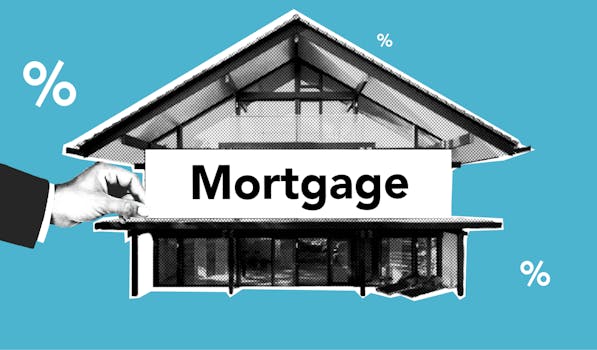
Cutout paper composition of realtor with inscription mortgage over house for purchases with payment of interest on amount of cost Photo: Monstera Production / Pexels
When you're comparing mortgage rates today US, it's not just about the raw percentage; it's also about the type of loan you choose. The two most common categories are fixed-rate mortgages and adjustable-rate mortgages (ARMs), each with distinct characteristics that affect your monthly payments and overall cost. A fixed-rate mortgage, as its name suggests, locks in an interest rate for the entire duration of the loan, typically 15 or 30 years. This offers predictable monthly payments, making budgeting straightforward and providing stability against future interest rate hikes. While the initial rate might be slightly higher than an ARM in some market conditions, the peace of mind from knowing your principal and interest payment won't change is invaluable for many homeowners. This stability is particularly appealing when rates are low, as borrowers can secure a favorable rate for decades. Adjustable-rate mortgages (ARMs), on the other hand, start with a lower interest rate for an initial period (e.g., 3, 5, 7, or 10 years), after which the rate adjusts periodically based on a chosen financial index plus a margin. While the initial lower payments can make a home more affordable in the short term, the risk lies in potential rate increases during the adjustment periods. This can lead to significantly higher monthly payments if market rates rise. ARMs typically come with caps that limit how much the rate can increase in a single adjustment period and over the life of the loan, offering some protection. However, the unpredictability can be a major concern for those on tight budgets or planning to stay in their home long-term. ARMs are often suitable for borrowers who anticipate selling or refinancing before the adjustment period begins, or for those who expect their income to increase substantially over time. Beyond fixed and adjustable, there are also government-backed loans like FHA, VA, and USDA loans, each with their own rate structures and eligibility requirements. FHA loans are insured by the Federal Housing Administration and are popular with first-time homebuyers due to their lower down payment requirements and more flexible credit standards. VA loans, guaranteed by the Department of Veterans Affairs, offer competitive rates and often require no down payment for eligible veterans and service members. USDA loans, for rural properties, also offer attractive terms to qualified borrowers. These government-backed options can sometimes offer slightly lower rates than conventional loans, or at least more accessible terms for specific borrower profiles. Understanding these different mortgage products is essential for finding the best fit for your financial situation and securing the most advantageous mortgage rates today US.

Strategies to Secure the Best Mortgage Rates Today US

Businessman in suit writes on whiteboard displaying mortgage loan rates during a real estate meeting. Photo: RDNE Stock project / Pexels
Securing the most favorable mortgage rates today US requires a strategic approach that goes beyond simply looking up daily averages. Your personal financial health plays a monumental role in the rate a lender will offer you. The first and arguably most critical factor is your credit score. Lenders use your credit score as a primary indicator of your creditworthiness and ability to repay debt. A higher credit score (generally 740+) signals lower risk to lenders, which translates into lower interest rates. Before even beginning your mortgage search, pull your credit reports from all three major bureaus (Equifax, Experian, and TransUnion), review them for errors, and work to improve any areas of weakness. Paying down existing debts, especially credit card balances, and avoiding new credit inquiries can significantly boost your score. Even a 20-point difference in your credit score can impact your interest rate and save you thousands over the life of the loan. Another crucial element is your debt-to-income (DTI) ratio. This ratio compares your total monthly debt payments to your gross monthly income. Lenders typically prefer a DTI ratio of 43% or lower, though some programs allow for higher. A lower DTI indicates that you have ample income to manage your mortgage payments comfortably, making you a less risky borrower. Reducing your DTI can involve paying off existing loans or increasing your income. Similarly, the size of your down payment directly impacts your loan-to-value (LTV) ratio. A larger down payment means you're borrowing less and have more equity in the home from day one, which reduces the lender's risk. Lenders often offer better rates for LTVs below 80%, and a larger down payment can also help you avoid private mortgage insurance (PMI). Perhaps the most impactful strategy is to shop around and compare offers from multiple lenders. Don't settle for the first quote you receive. Different lenders have varying overheads, risk appetites, and loan products, which means their rates and fees can differ significantly. Obtain quotes from at least three to five lenders, including large banks, credit unions, and online mortgage brokers. When comparing, look beyond just the interest rate; consider the Annual Percentage Rate (APR), which includes fees and other costs, providing a more accurate picture of the loan's true cost. Ask for a loan estimate (LE) from each lender, which provides a standardized comparison of loan terms. You can use these competing offers to negotiate for a better rate or lower fees. Even a fractional reduction in your interest rate can result in substantial savings over the 15 or 30-year life of a mortgage, making this due diligence well worth the effort. Leveraging tools like a mortgage calculator can also help you visualize the long-term impact of different rates.

Common Mistakes to Avoid When Seeking Mortgage Rates Today US

A hand holding a motivational mug with 'Make Mistakes' against a sunset in Lviv. Photo: Roman Koval / Pexels
Navigating the mortgage market can be daunting, and several common pitfalls can lead to higher costs or missed opportunities when you're focusing on mortgage rates today US. Avoiding these mistakes can save you significant money and stress: * **Not Shopping Around Enough:** This is perhaps the biggest mistake. Many borrowers only get one or two quotes, assuming all lenders are the same. As discussed, rates and fees vary widely. Failing to compare at least 3-5 lenders could cost you thousands over the loan term. Dedicate time to truly shop and negotiate. * **Ignoring Your Credit Score:** A low credit score is a direct path to higher interest rates. Many people don't proactively check or improve their credit before applying for a mortgage. Begin credit repair efforts months in advance to ensure you present the strongest possible financial profile. * **Misunderstanding the APR vs. Interest Rate:** The interest rate is what you pay on the principal. The Annual Percentage Rate (APR) includes the interest rate plus certain fees and costs. While the interest rate determines your monthly principal and interest payment, the APR gives you a truer picture of the total cost of borrowing. Always compare APRs when evaluating loan offers. * **Making Major Financial Changes During the Application Process:** Once you've applied for a mortgage, avoid opening new credit lines, making large purchases on credit, changing jobs, or closing existing credit accounts. These actions can negatively impact your credit score or debt-to-income ratio, potentially jeopardizing your loan approval or leading to a higher rate. * **Not Locking Your Rate Strategically:** Mortgage rates fluctuate daily. Not locking your rate leaves you exposed to market volatility. However, locking too early or too late can also be a mistake. Understand the current market trends and discuss the best time to lock with your lender. Be aware of the lock period duration; some are 30 days, others 60 or 90. Ensure it covers your expected closing date. * **Overlooking Loan Fees and Closing Costs:** A low interest rate might be offset by high fees. Always scrutinize the 'Loan Estimate' document for all associated costs, including origination fees, appraisal fees, title insurance, and other closing costs. These can add up to 2-5% of the loan amount. * **Not Having Sufficient Down Payment or Reserves:** While low down payment options exist, a smaller down payment often means higher interest rates and mandatory private mortgage insurance (PMI). Additionally, lenders want to see that you have sufficient reserves (money in savings) after closing to cover several months of mortgage payments. Lacking these can impact your rate or approval.

Comparison

Feature30-Year Fixed15-Year Fixed5/1 ARM
Payment StabilityHigh (fixed for life)High (fixed for life)Low (adjusts after 5 years)
Monthly PaymentLowerHigherLowest initial
Total Interest PaidHighestLowestVariable, potentially high
Rate RiskNoneNoneSignificant (after initial period)
Ideal ForLong-term stabilityFaster payoff, lower interestShort-term ownership, rising income

What Readers Say

"Using this guide to track mortgage rates today US was a game-changer. I felt so much more confident negotiating my rate and ended up saving a quarter point on my 30-year fixed loan."

Sarah J. · Austin, TX

"I was overwhelmed by all the mortgage info, but this resource broke down the 'why' behind mortgage rates today US. It helped me choose between a fixed and an ARM wisely."

Mark D. · Miami, FL

"By following the advice here, I improved my credit score by 50 points in 3 months, which directly led to a significantly better mortgage rate. My monthly payment is now $150 less!"

Jessica L. · Seattle, WA

"The information on market factors influencing mortgage rates today US was excellent, though I wish there was a real-time rate tracker embedded. Still, incredibly helpful for overall strategy."

Kevin P. · Chicago, IL

"As a first-time homebuyer, I felt completely lost. This article on mortgage rates today US clarified everything, from DTI to shopping lenders. Highly recommend for anyone entering the market."

Maria G. · Denver, CO

Frequently Asked Questions

What is the most accurate way to check mortgage rates today US?

The most accurate way to check mortgage rates today US is to obtain personalized quotes from multiple lenders, including banks, credit unions, and online mortgage brokers. While general averages are useful for trends, your specific rate will depend on your credit score, down payment, loan type, and other financial factors. Always request a Loan Estimate for a clear comparison.

Should I lock my mortgage rate immediately or wait?

Deciding when to lock your mortgage rate depends on your risk tolerance and market outlook. If rates are trending upwards, locking sooner might be wise. If they are stable or falling, waiting could yield a better rate. Discuss market forecasts with your lender, and consider a 'float-down' option if available, which allows you to secure a lower rate if market rates drop before closing.

How can I improve my chances of getting a lower mortgage rate?

To improve your chances of getting a lower mortgage rate, focus on boosting your credit score (aim for 740+), reducing your debt-to-income ratio (below 43%), and making a larger down payment (20% or more to avoid PMI and potentially get better rates). Additionally, shop around aggressively with multiple lenders to compare offers.

Do closing costs affect my mortgage rate?

Closing costs themselves don't directly affect your interest rate, but they are a significant part of the overall cost of your loan. Some lenders might offer a slightly lower interest rate in exchange for higher upfront fees (points), or vice-versa. Always compare the Annual Percentage Rate (APR), which incorporates some closing costs, for a more accurate total cost comparison.

Is a 30-year fixed mortgage always better than a 15-year fixed?

Neither a 30-year nor a 15-year fixed mortgage is inherently 'better'; it depends on your financial goals. A 30-year fixed offers lower monthly payments and greater flexibility in your budget, but you'll pay more interest over the long term. A 15-year fixed has higher monthly payments but allows you to pay off your home faster and save significantly on total interest paid. Consider your income stability and long-term financial plans.

Who should closely monitor mortgage rates today US?

Anyone planning to buy a home, refinance an existing mortgage, or even considering selling their property should closely monitor mortgage rates today US. Homebuyers can time their purchase and rate lock, while homeowners can identify opportune moments to refinance and potentially save thousands. Even real estate investors watch rates as they impact affordability and market demand.

Are online mortgage rates reliable indicators?

Online mortgage rates can be a good starting point for understanding general market trends and averages. However, these are often advertised 'best case' scenarios and may not reflect the actual rate you'll qualify for. For a reliable indicator, you must get personalized quotes from lenders, as your specific financial situation will heavily influence the final offer.

What is the forecast for mortgage rates today US in the coming months?

Forecasting mortgage rates is challenging due to the dynamic nature of economic indicators. Experts generally anticipate that Federal Reserve policy, inflation trends, and the overall health of the U.S. economy will continue to be primary drivers. While short-term fluctuations are inevitable, many economists predict rates will likely remain sensitive to inflation data and the Fed's stance on interest rates, potentially experiencing modest shifts rather than dramatic changes in either direction.

Don't leave your biggest financial decision to chance. Empower yourself with the knowledge to understand and secure the best mortgage rates today US. Start comparing lenders and taking control of your homeownership journey now.

Topics: mortgage rates today UScurrent mortgage ratesUS home loan ratesmortgage interest rateshousing market trends
Leo List
Brampton weed
Adultwork