How to Calculate Property Taxes on a House: Your Ultimate Guide
August 19, 2026 17 min read 3,433 words
Master the art of understanding and calculating your property taxes to budget effectively and avoid surprises.
Calculate Your Taxes Now
Understanding Property Tax Fundamentals: The Building Blocks of Your Bill
 Photo: MART PRODUCTION / Pexels
Property taxes represent a significant annual expense for homeowners across the United States. Far from being a simple, flat fee, these taxes are complex, varying wildly from one jurisdiction to another and even between similar properties within the same area. To truly understand how to calculate property taxes on a house, one must first grasp the fundamental components that contribute to this calculation. At its core, property tax is an ad valorem tax, meaning it is based on the value of the property. This value is determined by a local government entity, typically a county or municipal assessor's office, and is known as the 'assessed value.'
The assessed value is not always the same as the market value – the price a home would sell for on the open market. Instead, it's a percentage of the market value, determined by an 'assessment ratio' set by local laws. For instance, if your home has a market value of $300,000 and your locality has an assessment ratio of 50%, your assessed value would be $150,000. This distinction is crucial because your tax bill is directly calculated from this assessed value, not necessarily what you paid for the home or what it's currently worth in a sale.
Beyond the assessed value, the next critical component is the 'tax rate' or 'millage rate.' This rate is set by various local taxing authorities, including school districts, county governments, city councils, and sometimes special districts for services like fire protection or libraries. Each of these entities levies its own tax rate. The millage rate is typically expressed as 'mills' per dollar of assessed value, where one mill equals one-tenth of a cent ($0.001) or $1 per $1,000 of assessed value. So, a millage rate of 20 mills means you pay $20 for every $1,000 of your assessed value. Alternatively, some jurisdictions express the tax rate as a percentage. For example, a 2% tax rate is equivalent to 20 mills. It's important to aggregate all the individual millage rates from the various taxing bodies to arrive at the total effective tax rate for your property.
Finally, exemptions and deductions play a pivotal role in reducing your taxable burden. These are specific reductions in the assessed value granted to eligible homeowners. Common exemptions include the homestead exemption, which lowers the taxable value for primary residences; exemptions for veterans, seniors, or disabled individuals; and sometimes agricultural exemptions. These aren't direct reductions in your tax bill but rather a reduction in the value on which your taxes are calculated. For example, if your assessed value is $150,000 and you qualify for a $25,000 homestead exemption, your *taxable* assessed value becomes $125,000. Understanding and applying for these can significantly impact your annual property tax payment. Knowing these fundamentals is the first step in demystifying
real estate ownership costs.
It's worth noting that property tax systems are not static. Assessed values can change annually or periodically based on market fluctuations and reassessment cycles. Tax rates can also be adjusted by local governments to meet budgetary needs. Therefore, staying informed about these changes is an ongoing responsibility for homeowners. Resources such as your local assessor's website, county auditor's office, or even local news outlets often provide updates on assessment cycles and proposed tax rate changes. Being proactive in understanding these elements will empower you to better predict and manage your property tax obligations. This foundational knowledge is indispensable for any current or prospective homeowner trying to understand how to calculate property taxes on a house.
Step-by-Step Guide: How to Calculate Property Taxes on a House Effectively
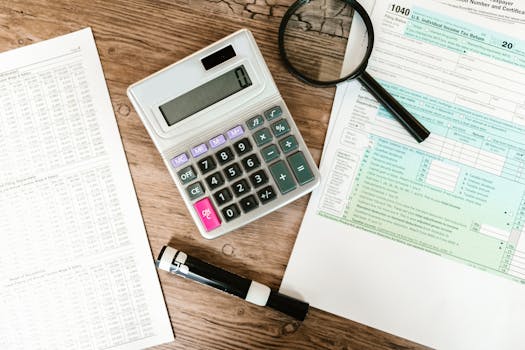 Photo: RDNE Stock project / Pexels
Calculating your property taxes can seem daunting, but by breaking it down into manageable steps, you can accurately estimate your annual liability. This section will walk you through the precise methodology involved in answering the question: how to calculate property taxes on a house.
**Step 1: Determine Your Home's Assessed Value.** The first and most critical piece of information you need is your home's assessed value. This is typically provided on your annual property tax statement or can be found on your local county assessor's or auditor's website. Search for your property by address or parcel number. The assessor determines the market value of your property, then applies a state-mandated assessment ratio to arrive at the assessed value. For example, if your home's market value is $400,000 and the assessment ratio in your state is 35%, your assessed value would be $400,000 * 0.35 = $140,000. It's important not to confuse the market value with the assessed value; only the latter is used for tax calculation.
**Step 2: Identify Applicable Exemptions and Deductions.** Before you can calculate the actual tax, you need to subtract any eligible exemptions or deductions from your assessed value. These are programs designed to reduce the taxable portion of your property's value. The most common is the homestead exemption, which typically applies to your primary residence. Other exemptions might include those for senior citizens, veterans, individuals with disabilities, or agricultural land. Each exemption has specific eligibility criteria and provides a fixed reduction in assessed value. For instance, if your assessed value is $140,000 and you qualify for a $50,000 homestead exemption, your *taxable assessed value* becomes $140,000 - $50,000 = $90,000. Make sure you have applied for all exemptions for which you are eligible, as these can significantly lower your tax bill.
**Step 3: Find the Total Millage Rate (Tax Rate).** The millage rate is the combined rate of all taxing authorities that levy taxes on your property. This includes county government, city government, school districts, and sometimes special districts (e.g., library districts, fire districts, water districts). Each of these entities will have its own millage rate. These rates are usually published annually by your county auditor or tax commissioner's office and are often available on their websites. Millage rates are typically expressed as 'mills' (e.g., 20 mills) or as a percentage (e.g., 2%). To get the total millage rate for your property, you must add up the individual rates from all the applicable taxing authorities. For example, if the county rate is 5 mills, the city rate is 10 mills, and the school district rate is 15 mills, your total millage rate would be 5 + 10 + 15 = 30 mills.
**Step 4: Perform the Calculation.** Once you have your taxable assessed value and the total millage rate, you can perform the calculation. The formula is straightforward:
* **Property Tax = (Taxable Assessed Value / 1,000) * Total Millage Rate (in mills)**
OR
* **Property Tax = Taxable Assessed Value * Total Tax Rate (as a percentage)**
Let's use our example: If your taxable assessed value is $90,000 and your total millage rate is 30 mills, your calculation would be ($90,000 / 1,000) * 30 = $90 * 30 = $2,700. So, your estimated annual property tax would be $2,700. If the rate was expressed as a percentage, say 3%, the calculation would be $90,000 * 0.03 = $2,700. This precise method allows you to accurately estimate what you owe, helping you budget and plan your finances effectively. Always double-check your figures against official statements to ensure accuracy and understanding.
Factors Influencing Property Tax and Strategies for Managing Them
 Photo: RDNE Stock project / Pexels
Understanding how to calculate property taxes on a house is just one piece of the puzzle; it's equally important to comprehend the various factors that influence these taxes and what strategies homeowners can employ to manage them effectively. Property taxes are dynamic and subject to change due to a multitude of local and economic conditions. Being aware of these influences can help you anticipate potential shifts in your tax burden and plan accordingly. The most significant factor is the **assessed value of your property**. This value is periodically updated by local assessors, typically every few years, to reflect current market conditions. If property values in your area are appreciating rapidly, your assessed value, and subsequently your tax bill, will likely increase. Conversely, a downturn in the market could lead to a decrease in assessed value, though tax rates might be adjusted to compensate for a smaller tax base.
Another crucial factor is the **local millage rate**, which is determined by the budgetary needs of various taxing authorities. School districts often account for the largest portion of your property tax bill, followed by county and city services. When these entities require more funding—for new school construction, road repairs, public safety, or other infrastructure projects—they may propose an increase in the millage rate. These rate changes are often subject to public hearings and sometimes voter approval, making civic engagement an important strategy for homeowners. Staying informed about local elections and proposed tax levies can empower you to voice your opinion and potentially influence outcomes that directly affect your wallet.
Beyond these core elements, **economic development** and population growth in your region can also impact property taxes. Rapid growth might lead to increased demand for public services, potentially driving up tax rates, or it could expand the tax base, distributing the burden more widely. Conversely, economic stagnation or decline can put pressure on local governments, sometimes leading to higher rates on a shrinking tax base. The condition and features of your specific property also play a role. Major renovations or additions that increase your home's square footage or overall value will likely lead to a reassessment and a higher tax bill. Conversely, deferred maintenance or damage might lead to a lower assessment, though this is not a desirable strategy.
Strategies for managing property taxes include **appealing your property assessment**. If you believe your home has been overvalued by the assessor, you have the right to appeal. This typically involves presenting evidence of comparable properties in your area that have sold for less or demonstrating flaws in the assessor's valuation method. This can be a complex process but can result in significant savings. Another strategy is to **ensure you are claiming all eligible exemptions and deductions**. Many homeowners overlook these opportunities, missing out on reductions in their taxable value. Regularly checking with your local assessor's office for new or updated exemptions is a smart practice.
Understanding your real estate investment means understanding these nuances.
Finally, proactive **financial planning and budgeting** are essential. Incorporate your estimated property tax into your monthly or annual budget, even if you pay through an escrow account. This ensures you're prepared for any increases and can plan for major financial commitments. Some homeowners choose to set aside funds monthly into a separate savings account to cover their annual or semi-annual tax payments, providing a buffer against unexpected increases. By actively monitoring assessed values, engaging with local government decisions on tax rates, taking advantage of exemptions, and planning financially, homeowners can effectively manage their property tax burden.
Common Mistakes to Avoid When Calculating Property Taxes and Smart Tips
 Photo: Nataliya Vaitkevich / Pexels
Navigating the complexities of property taxes can lead to several common pitfalls that homeowners should be aware of. Avoiding these mistakes and adopting smart tips can save you time, stress, and potentially a significant amount of money when you're trying to figure out how to calculate property taxes on a house.
**Common Mistakes to Avoid:**
* **Confusing Market Value with Assessed Value:** Many homeowners mistakenly assume their property taxes are based on their home's market value or purchase price. As discussed, taxes are calculated on the *assessed value*, which is often a percentage of the market value. Always refer to your official assessment for the correct figure.
* **Ignoring Exemptions and Deductions:** One of the biggest oversights is failing to apply for or renew eligible property tax exemptions. Homestead exemptions, senior citizen exemptions, veteran exemptions, and disability exemptions can significantly reduce your taxable value. Failing to claim these can mean paying hundreds or even thousands of dollars more than necessary. Check eligibility annually.
* **Not Reviewing Your Assessment Annually:** Property assessments can change, sometimes due to market shifts, sometimes due to errors. Not reviewing your annual assessment notice means you might miss an incorrect valuation that could lead to an inflated tax bill. Always scrutinize the assessment for accuracy.
* **Missing Appeal Deadlines:** If you believe your property has been over-assessed, you have the right to appeal. However, appeals have strict deadlines. Missing these deadlines means you forfeit your opportunity to challenge the assessment for that year, locking you into a potentially higher tax bill.
* **Failing to Understand Local Millage Rates:** Property tax bills are a sum of various local levies. Not understanding the breakdown of these millage rates (for schools, county, city, etc.) makes it harder to understand why your taxes are what they are and to identify potential areas for concern or advocacy.
**Smart Tips for Managing Property Taxes:**
* **Proactively Research Your Assessed Value and Tax Rate:** Don't wait for the bill. Most county assessor or auditor websites allow you to look up your property's assessed value and the current millage rates for your area. Do this annually to stay informed.
* **Keep Records of Home Improvements:** While improvements can increase your home's value and thus its assessment, keeping detailed records (permits, invoices, dates) can help you understand *why* an assessment changed and can be useful if you ever need to appeal.
* **Compare Your Assessment to Neighbors':** Use online county records to compare your home's assessed value per square foot to similar properties in your neighborhood. If yours is significantly higher without clear justification, it could be grounds for an appeal.
* **Attend Public Hearings on Tax Rates:** Local governments often hold public meetings when considering changes to millage rates. Attending these gives you insight into budgetary needs and an opportunity to voice your concerns or support.
* **Budget for Potential Increases:** Even if your taxes seem stable, market fluctuations and local government needs can cause increases. Factor a potential 3-5% increase into your annual budget to avoid financial surprises.
* **Seek Professional Advice When Appealing:** If you decide to appeal your assessment, consider consulting with a real estate attorney or a professional appraiser. Their expertise can be invaluable in building a strong case.
By being vigilant, informed, and proactive, homeowners can navigate the property tax landscape more effectively, ensuring they are paying their fair share without overpaying. Understanding these nuances is crucial for any homeowner looking to master how to calculate property taxes on a house and manage their financial obligations responsibly.
