How to Become a Real Estate Agent in California: Your Guide
how to become a real estate agent in california

How to Become a Real Estate Agent in California: Your Guide

Navigate the path to a thriving real estate career in the Golden State with our expert-led, step-by-step instructions.

Start Your Journey

Key Takeaways

  • ✓ Must be 18 years or older to apply for a California real estate salesperson license.
  • ✓ Requires completion of three college-level courses: Real Estate Principles, Real Estate Practice, and one elective.
  • ✓ Applicants must pass a comprehensive state examination administered by the California Department of Real Estate (DRE).
  • ✓ Fingerprinting and a background check are mandatory parts of the licensing process.
  • ✓ A sponsoring broker is required to activate your license and begin practicing.

How It Works

1
Meet Eligibility Requirements

Ensure you are at least 18 years old, a U.S. citizen or legally admitted alien, and have a Social Security or ITIN number. These are foundational prerequisites for starting your application.

2
Complete Pre-License Education

Enroll in and successfully complete three 45-hour DRE-approved courses. These courses provide the essential knowledge base for real estate practice and the state exam.

3
Apply for the State Exam

Submit your completed application, course certificates, and fees to the California Department of Real Estate. Once approved, you will receive authorization to schedule your licensing examination.

4
Pass the State Exam

Prepare thoroughly and successfully pass the challenging California Real Estate Salesperson Exam. A passing score of 70% or higher is required to move forward in the licensing process.

5
Submit License Application & Fingerprints

After passing the exam, submit your final license application, complete fingerprinting for a background check, and secure a sponsoring broker. Your license will then be issued and active.

Understanding the California Real Estate License Requirements
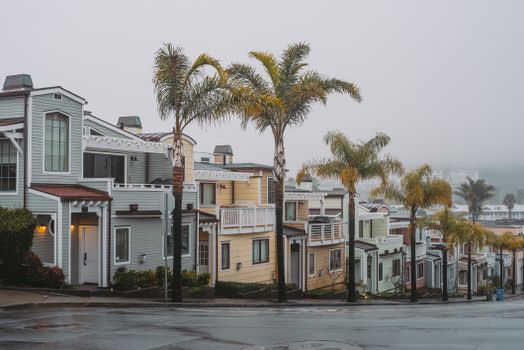
A picturesque suburban street with colorful houses and palm trees enveloped in foggy weather. Photo: Josh Hild / Pexels
Embarking on a career as a real estate agent in California is an exciting venture, but it begins with a clear understanding of the California Department of Real Estate (DRE) requirements. The DRE is the governing body that oversees all real estate licensing and regulations within the state, ensuring that all professionals meet stringent standards of knowledge and ethics. To even begin the application process, you must be at least 18 years old and either a U.S. citizen or a legally admitted alien. While a college degree isn't explicitly required, the DRE mandates specific pre-licensing education that is equivalent to college-level coursework. This educational foundation is crucial for developing the comprehensive understanding needed to navigate California's complex real estate landscape. The DRE's rigorous process is designed to protect the public and maintain the integrity of the real estate profession, making your license a testament to your commitment and expertise. The core of the pre-licensing education consists of three mandatory courses, each typically 45 hours in length. These include Real Estate Principles, Real Estate Practice, and one DRE-approved elective course. The Real Estate Principles course covers fundamental concepts such as property ownership, contracts, agency, and finance. It provides the theoretical groundwork upon which all other real estate knowledge is built. Real Estate Practice, on the other hand, delves into the practical aspects of the business, teaching you about listings, marketing, negotiations, and escrow procedures. The elective course offers flexibility, allowing you to specialize in areas like real estate finance, property management, or real estate economics, depending on your interests and career goals. These courses can be completed through various DRE-approved providers, including online schools, community colleges, and private real estate academies. Choosing the right educational provider is a critical first step, as the quality of instruction can significantly impact your preparedness for the state exam. Ensure that the provider is officially approved by the DRE to avoid any issues with your application. Many aspiring agents opt for online courses due to their flexibility, allowing them to study at their own pace while balancing other commitments. However, some prefer in-person classes for the direct interaction with instructors and peers. Regardless of the format, thorough engagement with the material is paramount. Understanding the curriculum and actively participating in your studies will lay a strong foundation for your future success. Remember, this education isn't just about passing an exam; it's about building the knowledge base for a successful and ethical career in California real estate.

Navigating the California Real Estate Salesperson Exam

A real estate agent holding a home for sale sign and clipboard outside a property. Photo: Thirdman / Pexels
Once you've successfully completed your pre-licensing education, the next significant hurdle on how to become a real estate agent in California is the state salesperson examination. This exam is notoriously challenging, designed to test your comprehensive knowledge of real estate principles, practices, and California-specific laws. The DRE administers the exam, and it is a closed-book, multiple-choice test. You'll have 3 hours and 15 minutes to complete 150 questions, and a passing score of 70% or higher is required. The content covered is extensive, encompassing topics from property ownership and land use controls to valuation, financing, agency, and contracts. It also includes specific questions on California real estate law and ethics, which are critical given the state's unique legal landscape. Preparation is key to passing this exam on your first attempt. Many aspiring agents utilize a combination of study methods, including reviewing their pre-license course materials, enrolling in exam prep courses, and taking practice tests. Exam prep courses are specifically designed to condense the vast amount of information into manageable, test-focused modules, often providing strategies for tackling difficult questions and identifying common pitfalls. Practice tests are invaluable as they familiarize you with the exam format, question types, and time constraints. They also help you identify areas where you need further study. It's recommended to take numerous practice exams and aim for consistent passing scores before sitting for the actual state exam. Don't underestimate the importance of understanding the nuances of California real estate law, as a significant portion of the exam will focus on these specifics. After completing your education, you'll submit your examination application (RE 400A) along with your course certificates and the required fee to the DRE. Once your application is processed and approved, the DRE will send you an Authorization to Take Exam letter, which will include instructions on how to schedule your exam appointment. Exams are administered at various testing centers across California, and you'll typically have several options for dates and locations. On the day of the exam, arrive early, well-rested, and with all required identification. Remember to bring a calculator, as some questions may require mathematical computations related to finance or property valuation. If you don't pass on your first attempt, don't despair. The DRE allows you to reapply for the exam as many times as needed, though you'll need to pay the examination fee each time. Analyze your score report to identify weak areas and focus your subsequent study efforts there. With persistence and thorough preparation, you can conquer the California real estate salesperson exam and move closer to achieving your goal.

Activating Your License and Launching Your California Real Estate Career

Real estate agent and mature couple shaking hands outdoors, sealing a deal with smiles. Photo: Kampus Production / Pexels
Passing the California Real Estate Salesperson Exam is a momentous achievement, but it's not the final step on how to become a real estate agent in California. The next crucial phase involves submitting your final license application and securing a sponsoring broker. After successfully passing the exam, you'll receive a notification from the DRE. You then need to submit the salesperson license application (RE 202) along with the appropriate fee. A critical component of this application is the live scan fingerprinting process. This is mandatory for a thorough background check, which is performed by the California Department of Justice (DOJ) and the Federal Bureau of Investigation (FBI). Any criminal history could potentially delay or even disqualify your application, so it's essential to be transparent and address any past issues with the DRE upfront. It’s important to note that your license cannot be issued until the DRE receives your fingerprint results and completes the background check, which can take several weeks. Once your background check clears and your license application is processed, the DRE will issue your official California Real Estate Salesperson License. However, to legally practice real estate, your license must be active, which means it must be associated with a licensed California real estate broker. Finding the right sponsoring broker is arguably one of the most important decisions you'll make in your early career. A good broker provides not only the legal umbrella under which you can operate but also mentorship, training, office resources, and networking opportunities. When choosing a broker, consider factors such as their reputation, the type of real estate they specialize in (residential, commercial, luxury, etc.), their commission splits, training programs, and the overall office culture. Don't rush this decision; interview several brokers, ask probing questions, and seek out a mentor who aligns with your professional aspirations. Choosing a brokerage that offers strong support for new agents can significantly accelerate your learning curve and contribute to your success. After securing a sponsoring broker, they will submit a form to the DRE associating your license with their brokerage. Once this is complete, your license becomes active, and you are officially ready to begin your career as a real estate agent in California. However, the learning doesn't stop there. Real estate is a dynamic industry that requires continuous education and adaptation. You'll need to understand local market trends, master negotiation skills, develop marketing strategies, and build a strong client base. Many successful agents recommend joining local real estate associations, attending workshops, and seeking out ongoing mentorship to refine your skills. Remember, the initial licensing is just the beginning; sustained success comes from dedication, continuous learning, and providing exceptional service to your clients.

Essential Tips for New Real Estate Agents in California

A couple consults a real estate agent in a modern office setting. Photo: Alena Darmel / Pexels
Launching your career as a real estate agent in California is an exciting new chapter, but it comes with its unique challenges and opportunities. To ensure a strong start and build a sustainable career, consider these essential tips: * **Build a Strong Sphere of Influence (SOI):** Your initial clients will likely come from your personal network. Inform everyone you know – family, friends, former colleagues, and acquaintances – that you are now a licensed real estate agent. Regularly communicate with them, offering valuable market insights without being overly salesy. Your SOI is your first and most reliable source of leads. * **Master Your Local Market:** While your pre-license education provided a broad overview, true success comes from deep knowledge of your specific geographic farming area. Understand local property values, school districts, amenities, zoning laws, and upcoming developments. Be the go-to expert for your chosen neighborhoods. * **Invest in Continuous Education and Training:** The DRE requires continuing education for license renewal, but don't just do the bare minimum. Seek out advanced training in negotiation, marketing, specific property types, or technology tools. The real estate market is constantly evolving, and staying ahead requires ongoing learning. * **Develop Strong Communication and People Skills:** Real estate is a people business. You'll be dealing with diverse personalities, emotions, and high-stakes transactions. Hone your active listening, empathy, and clear communication skills. The ability to build rapport and trust is invaluable. * **Embrace Technology:** Utilize CRM (Customer Relationship Management) software to manage leads, email marketing tools, social media for branding, and virtual tour platforms. Technology can streamline your workflow, expand your reach, and enhance your client services. * **Create a Robust Business Plan:** Treat your real estate career like a business. Develop a detailed business plan that outlines your goals, target market, marketing strategies, budget, and daily activities. Regularly review and adjust your plan as you gain experience. * **Network with Industry Professionals:** Connect with other agents, lenders, inspectors, appraisers, and contractors. Building a reliable network of trusted professionals not only provides you with valuable resources but also opens doors for referrals. * **Manage Your Finances Wisely:** As an independent contractor, your income can be inconsistent, especially in the beginning. Budget carefully, set aside money for taxes, and understand that it takes time to build a steady income stream. It's wise to have several months of living expenses saved. * **Seek Mentorship:** Find an experienced agent or broker who is willing to guide you. A mentor can provide invaluable advice, share best practices, and help you navigate challenging situations that arise in the field. Their insights can save you from common new-agent mistakes. * **Maintain Professionalism and Ethics:** Uphold the highest standards of ethics and professionalism in all your dealings. Your reputation is your most valuable asset. The DRE takes ethical breaches very seriously, and maintaining integrity is paramount for long-term success.

Comparison

FeatureCalifornia Salesperson LicenseCalifornia Broker LicenseLoan Officer License
Minimum Age18 years old18 years old18 years old
Education Requirement3 college-level courses (45 hrs each)8 college-level courses (45 hrs each)20 hours NMLS approved education
Experience RequirementNone2 years full-time experience as salesperson OR 4-year degree with real estate majorNone (state specific requirements may apply)
Exam DifficultyChallengingVery ChallengingModerate
Scope of PracticeWorks under broker supervisionCan operate independently, supervise agentsOriginates mortgage loans
Income PotentialCommission-based, varies greatlyHigher, includes overrides on agent commissionsCommission-based, varies

What Readers Say

"This guide truly demystified how to become a real estate agent in California. The step-by-step breakdown of education and exam requirements was incredibly clear and helped me plan my entire journey. I felt much more confident starting out after reading this."

Sarah J. · Los Angeles, CA

"As someone considering a career change, understanding the DRE's expectations for how to become a real estate agent in California was crucial. The insights on choosing a sponsoring broker were especially helpful and gave me great questions to ask during interviews."

Mark T. · San Diego, CA

"I followed the advice in this article for how to become a real estate agent in California, particularly regarding exam preparation. I passed the state exam on my first try! The tips on continuous education and networking are now my next focus."

Jessica L. · San Francisco, CA

"The guide provided a solid overview of how to become a real estate agent in California. While very comprehensive, I would have appreciated a bit more detail on the specific costs involved beyond just the basic fees. Still, an excellent resource overall."

David R. · Sacramento, CA

"Even as a seasoned professional looking to transition into real estate, this article offered fresh perspectives on how to become a real estate agent in California. The focus on ethical practice and local market mastery resonated deeply with my career philosophy."

Emily H. · Orange County, CA

Frequently Asked Questions

What are the basic eligibility requirements to become a real estate agent in California?

To be eligible, you must be at least 18 years old, a U.S. citizen or a legally admitted alien, and possess a valid Social Security Number or ITIN. You also need to complete the mandatory pre-licensing education courses approved by the California Department of Real Estate (DRE).

Is the California real estate exam very difficult to pass?

Yes, the California real estate salesperson exam is widely considered challenging. It's a 150-question multiple-choice test covering a broad range of topics, including California-specific laws, and requires a score of 70% or higher to pass. Thorough preparation and practice are essential for success.

How long does it typically take to become a real estate agent in California?

The timeline varies, but generally, it takes 3 to 6 months. This includes completing the 135 hours of pre-licensing education (which can be done in as little as 2.5 months), DRE application processing time, scheduling and passing the exam, and the background check.

What are the approximate costs involved in getting a real estate license in California?

The total cost typically ranges from $700 to $1,500. This includes pre-licensing course fees (around $200-$500), exam application fee ($60), license application fee ($245), and fingerprinting fees (around $50-$100). Additional costs for exam prep materials or study guides may apply.

Do I need a college degree to become a real estate agent in California?

No, a college degree is not explicitly required. However, you must complete the equivalent of three college-level courses (Real Estate Principles, Real Estate Practice, and one DRE-approved elective), each being 45 hours in length, to meet the educational requirements.

Who should consider becoming a real estate agent in California?

Individuals who are self-motivated, possess strong communication and negotiation skills, enjoy working with people, have a passion for sales and property, and are prepared for an entrepreneurial career path with variable income potential will thrive in this profession.

What are the risks associated with becoming a real estate agent?

Key risks include inconsistent income, especially in the initial years, high competition, demanding work hours, and the need for continuous self-motivation and marketing. There's also the responsibility of handling significant financial transactions and legal compliance.

What are the future trends for real estate agents in California?

Future trends include increased reliance on technology (AI, virtual reality tours), greater emphasis on data analytics for market insights, continued growth in specialized niches (e.g., green homes, smart homes), and evolving client expectations for personalized, tech-enabled services.

Ready to unlock your potential and build a rewarding career in one of the world's most dynamic real estate markets? Use this comprehensive guide to navigate how to become a real estate agent in California, and take the first step towards achieving your professional goals today.

Topics: how to become a real estate agent in californiacalifornia real estate licensereal estate career californiaDRE requirementsreal estate exam california
Leo List
Brampton weed
Adultwork EstrelaBet Vai de Bet R7 Bet Betão Galera Bet Rainbet Bet9ja Shop SportyBet BetKing Sisal Loto Foot Hollywoodbets YesPlay Odibets RushBet Jugabet BetWarrior BetCity MSport betPawa Fortebet