Foreclosed Homes For Sale In Texas: Your Guide to Deals
foreclosed homes for sale in texas

Foreclosed Homes For Sale In Texas: Your Guide to Deals

Unlock significant savings and discover hidden gems across Texas with our comprehensive guide to foreclosed properties.

Start Your Search Now

Key Takeaways

  • ✓ Foreclosures can offer significant savings, often 20-50% below market value.
  • ✓ Texas operates as a non-judicial foreclosure state, speeding up the process.
  • ✓ Multiple types of foreclosures exist: pre-foreclosure, auction, bank-owned (REO), and government-owned (HUD, VA).
  • ✓ Financing foreclosures can be more complex; conventional loans are often preferred for REOs.
  • ✓ Due diligence is crucial, as foreclosed homes are typically sold "as-is".

How It Works

1
Understand Foreclosure Types

Familiarize yourself with the different stages and types of foreclosure properties available, from pre-foreclosures to bank-owned assets. Each type presents unique opportunities and challenges for buyers.

2
Secure Your Financing

Before searching, get pre-approved for a loan that accommodates foreclosure purchases, as some types may require cash or specialized financing. This strengthens your offer and speeds up the buying process.

3
Search & Identify Properties

Utilize online listings, local real estate agents specializing in foreclosures, and county records to find suitable foreclosed homes. Focus on areas and property types that align with your investment goals.

4
Perform Due Diligence & Offer

Thoroughly research the property's history, conduct inspections (if allowed), and assess potential repair costs. Submit a competitive offer, understanding that foreclosures often involve a unique negotiation process.

Navigating the Texas Foreclosure Market: An Overview

Low angle view of the Texas State Capitol dome and flags in Austin, Texas. Photo: Ruben Reyes / Pexels
The landscape of foreclosed homes for sale in Texas presents a unique and often lucrative opportunity for savvy homebuyers and investors alike. Texas, with its robust economy, growing population, and diverse real estate markets, consistently sees a significant number of properties enter foreclosure. Understanding this market is the first crucial step toward securing a great deal. Unlike some other states, Texas primarily operates under a non-judicial foreclosure process, which means lenders can foreclose on a property without direct court intervention, provided the deed of trust includes a 'power of sale' clause. This typically results in a faster foreclosure timeline compared to judicial foreclosure states, impacting how and when properties become available. For buyers, this speed can be both an advantage and a challenge, requiring quick decision-making and preparedness. When we talk about foreclosures, it's not a monolithic category. There are several stages and types of foreclosed properties, each with its own characteristics and buying process. These include pre-foreclosures, which are properties whose owners have defaulted on their mortgage but haven't yet been repossessed; properties sold at auction, where bids are typically cash-only and come with significant risks; bank-owned properties (REOs – Real Estate Owned), which are homes that failed to sell at auction and are now owned by the lender; and government-owned properties (HUD homes, VA homes, USDA homes), which are properties that had government-insured mortgages and are now under the ownership of a federal agency. Each type requires a different approach to research, financing, and negotiation. For instance, REOs are often listed with real estate agents, making them more accessible to conventional buyers, while auction properties demand a higher degree of risk tolerance and cash on hand. Understanding these distinctions is paramount for anyone looking to capitalize on foreclosed homes for sale in Texas. It's also important to consider the regional variations within Texas; what might be common in Dallas-Fort Worth could differ significantly from Houston, Austin, or smaller rural communities. Market conditions, local regulations, and the sheer volume of foreclosures can vary widely, making localized research indispensable. Understanding local real estate trends can give you a significant edge in this competitive market.

Types of Foreclosed Properties and How to Find Them in Texas

A realtor conducting a house tour with potential buyers on the stairs of a modern home. Photo: Kampus Production / Pexels
Delving deeper into the specific types of foreclosed homes for sale in Texas reveals distinct pathways to ownership. Each category has its own set of rules, benefits, and potential drawbacks. **Pre-Foreclosures:** These are properties where the homeowner has fallen behind on mortgage payments but the bank has not yet repossessed the home. Often, homeowners in this stage are motivated to sell quickly to avoid foreclosure, potentially offering a good deal. Finding pre-foreclosures usually involves monitoring public records for 'Notice of Default' filings or using specialized online platforms. The advantage here is the potential to negotiate directly with the homeowner and acquire the property before it goes to auction, often in better condition than later-stage foreclosures. **Foreclosure Auctions:** If a pre-foreclosure doesn't resolve, the property typically proceeds to a public auction, often held on the first Tuesday of each month in Texas counties. These are high-risk, high-reward scenarios. Buyers usually need cash or certified funds to cover the full purchase price immediately, and properties are sold "as-is, where-is," without any opportunity for inspection before purchase. Furthermore, buyers are often responsible for any existing liens on the property. While prices can be exceptionally low, the lack of due diligence opportunities makes this route suitable only for experienced investors. **Bank-Owned Properties (REOs):** These are properties that failed to sell at a foreclosure auction and are now owned by the lending institution. REOs are generally the most accessible type of foreclosure for the average homebuyer. Banks typically list these properties with local real estate agents, making them easy to find on standard MLS listings and real estate websites. The bank will often clear any outstanding liens, and buyers usually have the opportunity to conduct inspections and appraisals, making the purchase process more similar to a conventional home sale. While the discounts might not be as steep as at auction, REOs offer a safer entry point into the foreclosure market. **Government-Owned Properties (HUD, VA, USDA):** These are properties that had federally insured mortgages (FHA, VA, USDA) and ended up in foreclosure, with ownership transferring to the respective government agency. HUD homes (from FHA loans) are widely available and are initially offered to owner-occupant buyers, meaning individuals who intend to live in the home. If no owner-occupant bids, investors can then make offers. VA and USDA homes follow similar processes. These properties are also typically listed through real estate agents and often come with the opportunity for inspections. Government agencies are often motivated sellers, and prices can be competitive. Websites like HUDHomeStore.com are primary resources for finding these properties. Exploring different loan types can be crucial when considering these government-backed properties. To find these properties, start with online real estate portals that allow filtering for foreclosures, bank-owned, or REO properties. Local county clerk websites often list upcoming foreclosure auctions. Specialized foreclosure listing services can also be a valuable resource, though they may require a subscription. Partnering with a real estate agent who specializes in foreclosures in your target Texas market is perhaps the most effective strategy, as they have access to the latest listings and can guide you through the intricacies of each type of purchase.

Financing and Due Diligence for Foreclosed Homes in Texas

Real estate agent making a phone call while holding documents near home for sale sign. Photo: Thirdman / Pexels
Securing the right financing and conducting thorough due diligence are paramount when purchasing foreclosed homes for sale in Texas. The financing aspect can vary significantly depending on the type of foreclosure. For pre-foreclosures, conventional mortgages are usually viable, as you're purchasing directly from the homeowner. However, the timeline might be expedited, requiring a lender who can move quickly. Foreclosure auctions, as previously mentioned, almost universally demand cash payment or certified funds on the day of the sale. This immediate payment requirement is a major barrier for most individual homebuyers and highlights why auctions are often dominated by professional investors. For bank-owned (REO) and government-owned properties (HUD, VA), traditional financing options like conventional, FHA, or VA loans are generally accepted. However, lenders may have stricter requirements if the property is in poor condition, sometimes requiring a higher down payment or even rejecting loans if the home is deemed uninhabitable. In such cases, specialized loans like FHA 203(k) or conventional renovation loans might be necessary, which allow you to finance both the purchase and necessary repairs into a single mortgage. It's crucial to get pre-approved by a lender experienced with foreclosures before you even start seriously looking. Due diligence cannot be stressed enough when dealing with foreclosed properties. Unlike a standard home sale where the seller provides disclosures and warranties, foreclosures are almost always sold "as-is." This means the buyer assumes all responsibility for the property's condition, including any hidden defects, structural issues, or necessary repairs. For REOs and government-owned properties, you typically get an inspection period, which is your golden opportunity. Hire a professional home inspector who is thorough and experienced with distressed properties. They can identify major issues like foundation problems, roofing defects, HVAC failures, or plumbing and electrical hazards that could cost tens of thousands to repair. Beyond the physical inspection, it's vital to conduct a comprehensive title search. While banks usually clear liens on REOs, it's not a guaranteed process, especially in auction purchases. A title search will reveal any outstanding taxes, mechanics' liens, HOA dues, or other encumbrances that could transfer to the new owner. Failing to do this could mean inheriting significant debt. Additionally, research the local market thoroughly. Understand comparable sales (comps) for homes in similar condition and assess the potential for appreciation. Consider the costs of renovation, property taxes, insurance, and potential holding costs if you plan to sell or rent the property after repairs. For investment properties, a detailed pro forma analysis is indispensable. Understanding property taxes in Texas is also a critical part of your due diligence, as they can significantly impact your monthly expenses. Ignoring these due diligence steps can turn a seemingly great deal into a financial nightmare.

Common Pitfalls and Smart Strategies for Buying Foreclosures in Texas

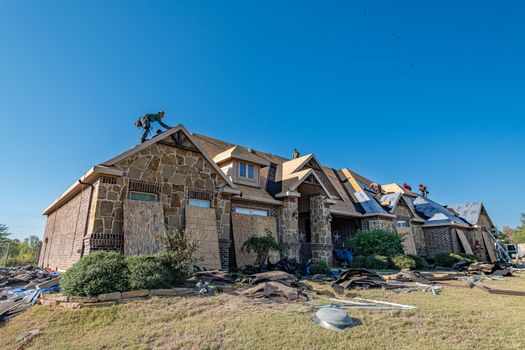
Brick house in Weatherford, Texas undergoing roof installation. Workers on roof under clear sky. Photo: Ryan Stephens / Pexels
While the allure of a great deal on foreclosed homes for sale in Texas is strong, several common pitfalls can trap unprepared buyers. Being aware of these can save you significant time, money, and stress, allowing you to implement smart strategies for a successful purchase. **Common Pitfalls:** * **Buying "Blind" at Auction:** The biggest risk is purchasing a property at auction without any prior inspection. You could end up with a money pit requiring extensive, unforeseen repairs that outweigh any initial savings. * **Underestimating Repair Costs:** Many foreclosures are sold in poor condition, often due to neglect or even intentional damage by previous occupants. Buyers frequently underestimate the true cost and time involved in bringing these properties up to livable or market standards. * **Ignoring Liens and Encumbrances:** Especially with auction properties, buyers can unwittingly inherit outstanding liens, back taxes, or HOA dues. A thorough title search is crucial to avoid these financial surprises. * **Emotional Bidding:** Getting caught up in the excitement of an auction or negotiation can lead to overpaying or making impulsive decisions, losing sight of your budget and investment goals. * **Lack of Financing Readiness:** Not having pre-approved financing or sufficient cash can cause you to miss out on competitive properties or complicate the closing process. * **Poor Market Research:** Failing to understand the local market value and comparable sales can lead to overpaying or investing in an area with low appreciation potential. **Smart Strategies for Success:** * **Team Up with a Foreclosure-Savvy Agent:** Work with a real estate agent who specializes in foreclosures and understands the unique processes in Texas. They can provide access to listings, navigate negotiations, and recommend inspectors and contractors. * **Secure Financing Early:** Get pre-approved for a loan that suits foreclosure purchases. If considering auctions, ensure you have certified funds readily available. * **Prioritize Due Diligence:** For REOs and government homes, always conduct a professional home inspection and a comprehensive title search. For auctions, drive by the property multiple times, research the neighborhood, and check public records for any available information. * **Set a Strict Budget:** Determine your maximum purchase price, including potential repair costs, and stick to it. Factor in closing costs, potential holding costs, and a contingency fund for unexpected expenses. * **Be Patient and Persistent:** Finding the right foreclosure can take time. Don't rush into a deal that doesn't meet your criteria. The market for foreclosed homes for sale in Texas is dynamic, and new opportunities arise constantly. * **Network with Investors:** Connect with other real estate investors in Texas. Their experiences and insights can be invaluable, especially for navigating the more complex aspects of foreclosure investing. * **Understand "As-Is" Sales:** Fully grasp the implications of buying a property "as-is." This means the seller will not make repairs, and you are accepting the property in its current condition with all its flaws. * **Consider a Renovation Loan:** If the property needs significant work, explore FHA 203(k) or conventional renovation loans that bundle the purchase and repair costs into one mortgage. This can make otherwise unaffordable properties accessible. By applying these smart strategies, you can significantly mitigate the risks and maximize the potential rewards of investing in foreclosed homes in Texas.

Comparison

FeatureBank-Owned (REO)Foreclosure AuctionPre-ForeclosureHUD Home
Inspection Allowed?Typically ✓✗ (exterior only)Typically ✓Typically ✓
Financing OptionsConventional, FHA, VACash/Certified FundsConventional, FHA, VAFHA, Conventional, VA
Seller DisclosuresLimited/NoneNoneSome (seller dependent)Limited/None
ConditionVariable, often needs workAs-is, unseen conditionVariable, potentially goodVariable, often needs work
Lien ResponsibilityBank clears liensBuyer's responsibilitySeller usually clearsHUD clears liens
Typical Discount10-30% below market20-50% below market5-20% below market10-25% below market
Buying ProcessStandard real estate agentPublic biddingDirect with homeownerHUD approved agent

What Readers Say

"Finding foreclosed homes for sale in Texas seemed daunting, but with the right agent, we landed an amazing REO property in Austin. It needed a little TLC, but we saved a substantial amount compared to market value."

Sarah J. · Austin, TX

"I used this guide to understand the different types of foreclosures. We ended up buying a HUD home in Houston, and the process was surprisingly smooth, allowing us to get a great deal for our first home."

Michael D. · Houston, TX

"After following the advice on due diligence, we found a foreclosed home in Dallas that only needed cosmetic updates. We sold it for a significant profit within six months – truly an excellent investment!"

Jessica L. · Dallas, TX

"The information on financing foreclosures was incredibly helpful. While the process for our bank-owned home took longer than expected, the savings were ultimately worth the extra effort and paperwork."

David P. · San Antonio, TX

"As an investor, understanding the nuances of Texas foreclosure auctions versus REOs is critical. This resource laid out the pros and cons clearly, helping me refine my strategy for acquiring distressed properties."

Emily R. · Plano, TX

Frequently Asked Questions

Where can I find reliable listings for foreclosed homes for sale in Texas?

Reliable listings can be found on major real estate websites by filtering for 'foreclosure' or 'bank-owned' properties. Additionally, specialized foreclosure listing services, local county clerk websites for auction schedules, and working with a real estate agent experienced in foreclosures are excellent resources. For government-owned homes, check specific agency sites like HUDHomeStore.com.

Are foreclosed homes always cheaper than traditional homes in Texas?

While foreclosed homes often offer significant discounts, they are not always cheaper in the long run. The initial purchase price might be lower, but potential repair costs, outstanding liens, and competitive bidding at auctions can increase the total investment. It's crucial to calculate all potential expenses to determine the true cost.

How do I finance a foreclosed home in Texas?

Financing depends on the type of foreclosure. Bank-owned (REO) and government-owned properties typically accept conventional, FHA, or VA loans, provided the property meets lending standards. Foreclosure auctions generally require cash or certified funds. For properties needing significant repairs, FHA 203(k) or conventional renovation loans can be viable options. Get pre-approved by a lender familiar with foreclosures.

What are the biggest risks when buying a foreclosed home in Texas?

The biggest risks include purchasing a property 'as-is' without inspection, inheriting undisclosed liens or back taxes, underestimating repair costs, and emotional overbidding at auctions. Lack of seller disclosures and the potential for previous occupant damage also pose significant risks. Thorough due diligence is your best defense against these pitfalls.

Is it better to buy a foreclosed home at auction or as an REO in Texas?

This depends on your risk tolerance and financial capacity. Auctions can offer deeper discounts but require cash, carry higher risk (no inspections, potential liens), and are best for experienced investors. REOs (bank-owned) are generally safer for average homebuyers, allowing inspections, traditional financing, and clear titles, though discounts might be less dramatic.

Who should consider buying foreclosed homes for sale in Texas?

Individuals seeking a potential bargain, real estate investors looking for flip opportunities or rental income, and homebuyers willing to invest time and money into renovations should consider foreclosed homes. It's particularly suited for those with a strong understanding of the real estate market and a healthy contingency fund.

What is the typical condition of foreclosed homes in Texas?

The condition of foreclosed homes in Texas varies widely. Some may be in good, livable condition, while others could require extensive repairs due to neglect, deferred maintenance, or even vandalism. It's common to find properties needing cosmetic updates, major system repairs (HVAC, plumbing, electrical), or structural work. Always assume an 'as-is' condition.

What are the future trends for foreclosed homes in Texas?

Future trends for foreclosed homes in Texas are influenced by economic conditions, interest rates, and employment stability. While the market has been robust, economic shifts can increase foreclosure rates. Keeping an eye on local and national economic indicators, as well as specific market segments, will help predict future availability and opportunities in the Texas foreclosure market.

Ready to uncover your next property gem? Explore the vast opportunities among foreclosed homes for sale in Texas and embark on a rewarding journey towards homeownership or investment success. Start your informed search today and unlock the potential savings waiting for you.

Topics: foreclosed homes for sale in texastexas foreclosure listingsbank owned homes texashud homes texasdistressed properties texas
Leo List

DK Escorts LU Escorts AT Escorts SE Escorts FI Escorts CH Escorts DE Escorts HR Escorts IE Escorts GR Escorts CZ Escorts NO Escorts BE Escorts FR Escorts SI Escorts IL Escorts NL Escorts PL Escorts HU Escorts ES Escorts IT Escorts PT Escorts SK Escorts RO Escorts ZA Escorts UY Escorts US Escorts UK Escorts NZ Escorts AU Escorts
Brampton weed
Adultwork EstrelaBet Vai de Bet R7 Bet Betão Galera Bet Rainbet Bet9ja Shop SportyBet BetKing Sisal Loto Foot Hollywoodbets YesPlay Odibets RushBet Jugabet BetWarrior BetCity MSport betPawa Fortebet