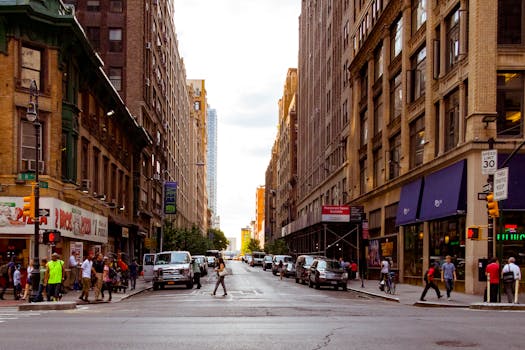
✓ New York City boasts the largest and most diverse commercial real estate market globally.
✓ Leasing options range from high-rise office towers in Manhattan to industrial warehouses in Brooklyn and Queens.
✓ Understanding zoning laws and local regulations is crucial for successful commercial leasing in NYC.
✓ Average commercial lease terms in NYC typically range from 5 to 10 years, with options for renewal.
How It Works
1
Define Your Business Needs
Clearly outline your space requirements, budget, desired location, and specific operational needs. This initial step is critical for narrowing down suitable options.
2
Engage a Commercial Broker
Partner with an experienced New York commercial real estate broker. They provide invaluable market insights, access to off-market listings, and negotiation expertise.
3
Property Search & Tours
Review curated listings that match your criteria and schedule property tours. Evaluate each space for suitability, infrastructure, and potential for future growth.
4
Negotiate & Lease Execution
Your broker will assist in submitting offers, negotiating lease terms, and navigating legal documentation. A thorough due diligence process ensures a favorable and legally sound agreement.
Navigating the Diverse New York Commercial Real Estate Market
The New York commercial real estate market is a vast and complex ecosystem, offering an unparalleled array of opportunities for businesses of all sizes and sectors. From the iconic skyscrapers of Midtown Manhattan to the burgeoning creative hubs of Brooklyn and the logistical powerhouses of Queens, understanding the nuances of each submarket is paramount when seeking commercial real estate for lease in New York. Manhattan, often considered the heart of global commerce, provides a diverse mix of office spaces, ranging from prestigious Class A towers on Park Avenue to more flexible, modern co-working environments in areas like Flatiron and SoHo. Businesses seeking a high-profile address and access to a dense network of financial, legal, and media industries often gravitate towards Midtown or Downtown. However, the premium pricing and competitive landscape in these areas necessitate a clear understanding of your budget and long-term strategic goals.
Beyond Manhattan, the outer boroughs present compelling alternatives. Brooklyn has transformed into a vibrant center for tech startups, creative agencies, and artisanal manufacturers, with areas like Dumbo, Bushwick, and Williamsburg offering unique loft spaces, industrial conversions, and modern retail storefronts. Queens, with its strategic access to major transportation arteries and airports, is a powerhouse for industrial and logistics operations, as well as a growing hub for diverse retail and office needs, particularly in Long Island City. The Bronx offers significant opportunities for industrial and manufacturing businesses, often at more accessible price points, while Staten Island provides a more suburban commercial landscape, suitable for local services and larger footprint retail.
Each borough and even specific neighborhoods within them possess distinct characteristics regarding property types, average lease rates, tenant demographics, and future development plans. For instance, a tech startup might prioritize flexible office space with high-speed internet and collaborative common areas in a trendy neighborhood, while a logistics company will focus on warehouse clear heights, loading dock access, and proximity to highways. A retail business will meticulously analyze foot traffic, visibility, and local demographics. Understanding these distinctions and aligning them with your business model is the first critical step in a successful leasing journey. Engaging with a local expert who specializes in your desired submarket can provide invaluable insights into current market trends, upcoming developments, and off-market opportunities. This granular understanding helps businesses make informed decisions, ensuring they secure a space that not only meets their immediate operational needs but also supports their long-term growth and strategic objectives. The sheer scale and dynamism of the New York market mean that opportunities are constantly evolving, requiring a proactive and well-informed approach to secure the ideal commercial real estate for lease. Learn more about real estate trends.
Key Considerations When Leasing Commercial Property in NYC
Leasing commercial real estate in New York involves a multitude of factors that extend far beyond simply finding an available space. Businesses must delve into the specifics of lease terms, operating expenses, build-out allowances, and the often-complex legal framework that governs commercial leases in the state. One of the most significant considerations is the lease structure itself. Many commercial leases in NYC are 'triple net' (NNN) leases, meaning the tenant is responsible for their proportionate share of property taxes, building insurance, and common area maintenance (CAM) in addition to the base rent. Understanding how these additional costs are calculated and what they include is crucial for accurately forecasting your total occupancy expenses. Other lease types, such as gross leases or modified gross leases, allocate these responsibilities differently, impacting your overall financial commitment.
Beyond the financial aspects, the physical attributes of the property are paramount. For office tenants, factors like floor plate size, natural light, elevator service, HVAC systems, and technological infrastructure (fiber optic connectivity, redundant power) are critical. Retail businesses must assess storefront visibility, foot traffic patterns, signage opportunities, and accessibility for customers, including public transit options and parking availability. Industrial tenants will prioritize ceiling heights, loading dock configurations, power capacity, and the overall layout for efficient operations.
Another vital element is the lease term and renewal options. Commercial leases in New York typically range from 5 to 10 years, though shorter or longer terms can be negotiated depending on market conditions and specific tenant needs. Understanding renewal clauses, rent escalation provisions, and any options for early termination or expansion is essential for long-term planning. The 'build-out' or tenant improvement (TI) allowance is also a significant negotiation point. This refers to the funds provided by the landlord to customize the space to the tenant's specifications. The amount of TI allowance can vary widely and directly impacts the upfront capital expenditure required from the tenant.
Finally, legal due diligence is non-negotiable. Reviewing the lease agreement with an experienced real estate attorney is crucial to ensure all terms are favorable, responsibilities are clearly defined, and potential liabilities are understood. This includes reviewing clauses related to subleasing, assignment, default, and dispute resolution. Zoning regulations, local permits, and compliance with building codes are also critical, particularly for businesses undertaking significant renovations or operating in specialized industries. A comprehensive understanding of these considerations will empower businesses to make informed decisions and secure a commercial lease that aligns with their operational and financial objectives in the competitive New York market.
Finding Your Niche: Office, Retail, and Industrial Spaces in New York
The search for commercial real estate for lease in New York is highly specialized, depending on whether your business requires office, retail, or industrial space. Each category comes with its own set of unique market dynamics, location preferences, and property specifications. For office space, New York offers an unparalleled spectrum. Traditional corporate offices dominate Midtown and Downtown Manhattan, providing prestigious addresses and proximity to financial and legal services. These spaces often feature modern amenities, advanced security, and professional management. However, for startups and creative firms, areas like Flatiron, SoHo, and parts of Brooklyn (e.g., Dumbo, Williamsburg) offer more flexible, open-plan layouts, co-working environments, and a vibrant, collaborative atmosphere. The demand for flexible office solutions, including serviced offices and co-working spaces, has surged, providing businesses with agility and reduced upfront costs, especially for those testing the New York market or scaling rapidly. When evaluating office space, consider the building's infrastructure, tenant mix, public transportation access, and the potential for future expansion within the same building or neighborhood.
Retail space in New York is driven by foot traffic, visibility, and demographic alignment. Prime retail corridors like Fifth Avenue, Madison Avenue, and SoHo command some of the highest rents globally, attracting luxury brands and flagship stores. However, neighborhood retail in areas like Greenwich Village, the Upper West Side, or Brooklyn's bustling streets offers different opportunities for local businesses, restaurants, and service providers. Key factors for retail include storefront presence, signage regulations, accessibility for customers (including ADA compliance), and the surrounding tenant mix. Understanding the local consumer base and competitive landscape is crucial for retail success. Lease terms for retail often include percentage rent clauses, where landlords receive a portion of the tenant's sales in addition to base rent, making a thorough financial projection essential.
Industrial real estate, while less visible to the casual observer, is the backbone of New York's economy, supporting logistics, manufacturing, distribution, and last-mile delivery. The majority of industrial properties are found in the outer boroughs, particularly Queens, Brooklyn, and the Bronx, due to their access to major highways, ports, and airports. Properties range from large-scale warehouses with high clear heights and multiple loading docks to smaller flex spaces suitable for light manufacturing or creative studios. Proximity to transportation hubs, zoning for specific industrial uses, power capacity, and the availability of skilled labor are critical considerations. The rise of e-commerce has significantly increased demand for last-mile distribution centers, driving innovation in multi-story industrial facilities. Securing the right industrial space is vital for operational efficiency and supply chain optimization. Navigating these specialized markets requires expert guidance to identify properties that truly align with your business's unique requirements and strategic goals. Explore different types of commercial properties.
Common Mistakes to Avoid When Leasing in NYC & Expert Tips
Leasing commercial real estate in New York is a high-stakes endeavor, and avoiding common pitfalls can save businesses significant time, money, and future headaches. One of the most prevalent mistakes is underestimating the total cost of occupancy. Many tenants focus solely on the base rent, neglecting to factor in additional expenses like operating costs (taxes, insurance, CAM), utility bills, tenant improvement costs, legal fees, and potential broker commissions. Always request a detailed breakdown of all associated costs and build a comprehensive budget.
Another common error is failing to conduct thorough due diligence on both the property and the landlord. Research the building's history, any past issues, and the landlord's reputation. A responsive and fair landlord can make a significant difference in your long-term occupancy experience. Similarly, neglecting to properly inspect the space for structural issues, HVAC functionality, electrical capacity, and compliance with local codes can lead to costly surprises down the line.
Here are some expert tips to ensure a smoother leasing process:
* **Start Early:** The New York market moves quickly. Begin your search well in advance (6-12 months for larger spaces) to allow ample time for property identification, negotiation, and build-out.
* **Define Your Non-Negotiables:** Before you start looking, clearly identify your absolute must-haves (e.g., specific location, minimum square footage, power requirements) and your nice-to-haves. This helps streamline the search and prevents wasting time on unsuitable properties.
* **Leverage a Local Commercial Broker:** This cannot be stressed enough. A good broker provides invaluable market knowledge, access to off-market listings, negotiation expertise, and guidance through the complex legal and financial aspects. Their fees are typically paid by the landlord, making their services a cost-effective advantage for tenants.
* **Understand Lease Language:** Commercial leases are complex legal documents. Never sign without a thorough review by an attorney specializing in New York commercial real estate. Pay close attention to clauses regarding rent escalations, renewal options, subleasing rights, default provisions, and personal guarantees.
* **Negotiate Everything:** From rent and tenant improvement allowances to free rent periods and operating expense caps, almost every aspect of a commercial lease is negotiable. Don't be afraid to ask for concessions that benefit your business.
* **Plan for Growth (or Contraction):** Consider your business's future trajectory. Can the space accommodate growth? Are there options to expand within the building? Conversely, are there provisions for subleasing if you need to downsize?
* **Verify Zoning and Permitting:** Ensure the property's zoning allows for your intended use and understand the process for obtaining any necessary permits or licenses for your operations or planned renovations.
By proactively addressing these areas, businesses can significantly mitigate risks and secure a commercial lease in New York that truly supports their success.
Comparison
Feature
Manhattan Office (Midtown)
Brooklyn Office (Dumbo)
Queens Industrial (LIC)
Bronx Retail (Local)
Average Rent (PSF/Yr)
$70 - $120+
$55 - $85
$30 - $55
$40 - $70
Primary Business Type
Finance, Legal, Media
Tech, Creative, Startups
Logistics, Manufacturing
Local Services, Boutiques
Prestige/Visibility
High
Medium-High
Low-Medium
Medium
Public Transit Access
Excellent
Good
Good
Fair-Good
Flexibility for Growth
✓
✓
✗
✗
Typical Lease Term
7-10 years
5-7 years
5-10 years
3-5 years
Operating Expenses
High
Medium
Medium-Low
Medium
What Readers Say
★★★★★
"Finding prime commercial real estate for lease in New York seemed daunting, but our broker made the process seamless. We secured an incredible office space in Midtown that perfectly fits our growing tech team and budget. Highly recommend their expertise!"
Sarah Chen · Manhattan, NY
★★★★★
"We needed a unique retail space in Williamsburg, and the team delivered. They understood our brand vision and found us a high-traffic location with excellent visibility. Our new store is thriving thanks to their guidance."
David Rodriguez · Brooklyn, NY
★★★★★
"Our logistics company required a specific type of industrial warehouse in Queens. The broker's deep market knowledge helped us find a facility with the exact loading dock configuration and clear height we needed, resulting in a 20% increase in operational efficiency within six months."
Maria K. (CEO) · Queens, NY
★★★★★
"While the initial search for commercial real estate for lease in New York was challenging due to our specific needs, our agent was incredibly patient. We eventually found a fantastic flex office space that offers the perfect balance of collaboration and privacy for our startup."
James P. (Startup Founder) · Flatiron, NY
★★★★★
"As a small business owner, navigating the commercial leasing market felt overwhelming. Our broker simplified everything, explaining lease terms clearly and helping us find an affordable, well-located storefront in the Bronx. We're so grateful for their support."
Olivia White · The Bronx, NY
Frequently Asked Questions
What are the typical lease terms for commercial real estate in New York?
Typical commercial lease terms in New York vary by property type and location. Office and industrial leases often range from 5 to 10 years, sometimes with options for renewal. Retail leases can be shorter, from 3 to 5 years, especially for smaller businesses, but can extend longer in prime locations. Shorter-term options like co-working spaces or flexible office solutions are also available for increased agility.
Is it better to lease or buy commercial property in NYC?
For most businesses, especially those new to the market or with evolving needs, leasing commercial property in New York is often more advantageous. Leasing requires less upfront capital, offers greater flexibility for relocation or expansion, and shifts property maintenance responsibilities to the landlord. Buying, while offering equity and potential appreciation, involves significant capital outlay, ongoing maintenance costs, and less flexibility, making it suitable for established businesses with long-term, stable space requirements.
How do I find a reputable commercial real estate broker in New York?
To find a reputable commercial real estate broker in New York, start by seeking recommendations from other business owners or industry peers. Look for brokers specializing in your specific property type (office, retail, industrial) and target neighborhood. Check their online reviews, professional affiliations, and track record of successful transactions. Interview several brokers to find one whose expertise, communication style, and understanding of your business needs align best with your objectives.
What are the hidden costs associated with commercial leases in NYC?
Beyond base rent, hidden costs in NYC commercial leases often include operating expenses (real estate taxes, building insurance, common area maintenance – CAM), utility charges, tenant improvement (TI) costs if the landlord's allowance is insufficient, legal fees for lease review, broker commissions (though often paid by the landlord, they can sometimes be factored into rent), and security deposits. It's crucial to get a full breakdown of all costs before signing.
How does New York's commercial real estate market compare to other major US cities?
New York's commercial real estate market is unique due to its immense scale, diversity, and global significance. It typically features higher rents and more complex lease structures compared to most other major US cities. While cities like San Francisco or Boston have strong tech or biotech sectors, New York's market is unparalleled in its breadth, encompassing finance, media, fashion, tech, and logistics, leading to intense competition and a dynamic environment that requires specialized expertise to navigate successfully.
Who should use commercial real estate for lease New York?
Any business, from startups to large corporations, seeking a physical presence in the world's most dynamic economic hub should consider commercial real estate for lease in New York. This includes companies needing office space for employees, retail storefronts for customer engagement, industrial warehouses for logistics and manufacturing, or specialized properties for unique operational needs. Leasing offers the flexibility and access to prime locations that are crucial for growth and market penetration in NYC.
What are the risks of signing a commercial lease without legal review?
Signing a commercial lease in New York without legal review carries significant risks. You could unknowingly agree to unfavorable terms regarding rent escalations, operating expense charges, repair responsibilities, or limitations on subleasing. There might be hidden liabilities, unclear default clauses, or inadequate protections for your business in case of disputes. An attorney ensures the lease aligns with your business interests, complies with local laws, and minimizes future legal and financial exposure.
What are the future trends for commercial real estate for lease in New York?
Future trends for commercial real estate for lease in New York include a continued emphasis on flexible office solutions and co-working spaces, driven by hybrid work models. There's also a growing demand for sustainable and wellness-focused buildings. In retail, experiential concepts and omnichannel integration are key. The industrial sector will see continued growth in last-mile logistics and automated warehousing. Overall, technology integration, data analytics, and a focus on tenant experience will shape the market.
Ready to secure your ideal commercial real estate for lease in New York? Our expert team is here to guide you through every step, from market analysis to lease negotiation. Contact us today to unlock the perfect space for your business's success in the Empire State.