

Find Your Ideal Commercial Real Estate for Lease Chicago
commercial real estate for lease chicago

Find Your Ideal Commercial Real Estate for Lease Chicago

Stunning aerial view of Chicago's skyline showcasing modern skyscrapers against Lake Michigan.Photo: Pawel aparatem_go / Pexels

Find Your Ideal Commercial Real Estate for Lease Chicago

Unlock Chicago's prime commercial spaces to elevate your business operations and achieve strategic growth.

Explore Available Properties

Key Takeaways

  • ✓ Chicago is the third-largest metropolitan economy in the US, offering diverse commercial opportunities.
  • ✓ The city boasts a robust transportation network, including O'Hare International Airport, a major global hub.
  • ✓ Commercial lease rates in Chicago vary significantly by neighborhood, property type, and amenities.
  • ✓ Key commercial districts include The Loop, River North, Fulton Market, and West Loop, each with distinct characteristics.

How It Works

1
Define Your Needs

Clearly outline your business requirements, including space size, budget, desired location, and specific amenities. This initial step is crucial for narrowing down suitable options.

2
Search & Tour Properties

Utilize comprehensive databases and broker services to identify properties that match your criteria. Schedule tours to physically evaluate potential spaces and their surroundings.

3
Negotiate Lease Terms

Once you find a suitable property, work with an experienced broker to negotiate favorable lease terms. This includes rent, lease duration, tenant improvement allowances, and other clauses.

4
Finalize & Occupy

Review all legal documents with an attorney, sign the lease, and prepare for your move-in. Ensure all necessary permits and insurance are in place before occupancy.

Understanding the Chicago Commercial Real Estate Market

View of modern and classic skyscrapers in downtown Chicago, IL.Photo: Edgar Colomba / Pexels
Chicago's commercial real estate market is a dynamic and multifaceted landscape, offering a wide array of opportunities for businesses seeking expansion, relocation, or a new beginning. From the towering skyscrapers of the Loop to the burgeoning tech and creative hubs of Fulton Market and West Loop, the city presents diverse environments tailored to various industry needs. Understanding the nuances of these submarkets is paramount for any business considering commercial real estate for lease in Chicago. The Loop, for instance, remains the quintessential central business district, characterized by its iconic architecture, proximity to major transportation hubs, and a concentration of financial, legal, and corporate services. It offers a premium address but often comes with higher price points. In contrast, areas like River North and Streeterville cater to a blend of office, retail, and hospitality, known for their vibrant dining scenes and upscale clientele. Exploring these distinct neighborhoods allows businesses to align their operational needs with the cultural and economic pulse of their chosen location. The market's resilience is often attributed to Chicago's diversified economy, which spans finance, technology, healthcare, manufacturing, and logistics. This economic breadth creates consistent demand across different property types – office, retail, industrial, and flex spaces. The city also benefits from a highly educated workforce, world-class universities, and a strategic geographic location at the heart of the Midwest, making it a pivotal logistics and distribution hub. For businesses looking for industrial properties, areas around O'Hare International Airport or along major interstate corridors offer vast warehouses, distribution centers, and manufacturing facilities. These locations provide unparalleled access to transportation networks, crucial for supply chain efficiency. Retail spaces, on the other hand, vary from high-street luxury boutiques on Michigan Avenue to community-oriented storefronts in Lincoln Park or Wicker Park, each demanding a tailored approach to market analysis and demographic understanding. Navigating this complex market requires a clear understanding of current trends, vacancy rates, and rental price fluctuations. Post-pandemic, Chicago's office market, like many major cities, has seen shifts, with a growing emphasis on flexible workspaces, amenity-rich buildings, and properties that promote collaboration and employee well-being. Tenants are increasingly looking for spaces that can adapt to hybrid work models, offering a blend of private offices, open collaboration zones, and technology-enabled meeting rooms. This evolution means that older, traditional office buildings are undergoing significant renovations to remain competitive, while new developments are incorporating these features from the ground up. Similarly, the industrial sector has boomed due to e-commerce growth, driving up demand for modern logistics facilities. Retail, while facing ongoing challenges from online shopping, sees success in experiential concepts and strategically located storefronts that complement local foot traffic and community needs. A comprehensive market analysis, often facilitated by experienced commercial real estate brokers, is essential to identify opportunities and mitigate risks when seeking commercial real estate for lease in Chicago.

Types of Commercial Real Estate for Lease in Chicago
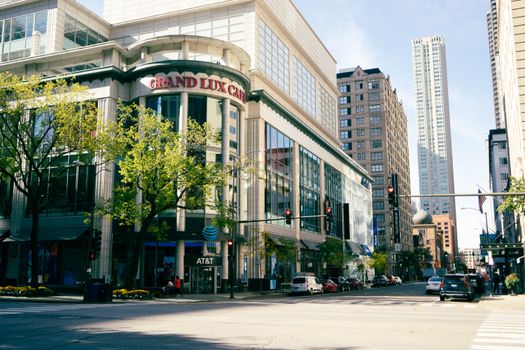
Vibrant cityscape in downtown Chicago with the Grand Lux Cafe and high-rise buildings on a sunny day.Photo: Otto Rascon / Pexels
Chicago's expansive urban and suburban fabric supports a broad spectrum of commercial property types, each designed to serve specific business functions. When searching for commercial real estate for lease in Chicago, understanding these categories is the first step towards finding the ideal fit for your operations. **Office Space:** This is perhaps the most recognized category, ranging from prestigious Class A high-rise offices in the Loop and River North to more affordable Class B and C spaces in diverse neighborhoods. Class A buildings offer premium amenities, modern infrastructure, and prime locations, often commanding higher rents. They are ideal for corporate headquarters, financial institutions, and professional services firms that prioritize image and accessibility. Class B and C spaces, while potentially older or with fewer amenities, can offer significant cost savings and flexibility, suitable for startups, non-profits, or businesses that value a specific neighborhood feel over a trophy address. Many office properties now offer flexible lease terms, co-working options, and managed spaces, catering to the evolving demands of the modern workforce. Shared office spaces and executive suites are also popular for smaller businesses or those needing a temporary presence without a long-term commitment. The rise of hybrid work models has further diversified the office market, with many businesses now seeking smaller, more efficient footprints or 'hub-and-spoke' models with a central office and satellite locations. **Retail Space:** Chicago's vibrant consumer market supports a wide variety of retail properties. This includes prime storefronts on iconic streets like Michigan Avenue and State Street, which are home to flagship stores and luxury brands. Beyond the downtown core, neighborhood retail spaces in areas such as Lincoln Park, Wicker Park, and Andersonville offer high foot traffic and a strong local customer base, perfect for boutiques, restaurants, cafes, and service-oriented businesses. Shopping centers and malls, both enclosed and open-air, provide larger footprints and ample parking, catering to a broader range of retailers. The key to successful retail leasing in Chicago lies in understanding the demographics of the target area, foot traffic patterns, and co-tenancy. Pop-up retail spaces have also gained traction, offering short-term opportunities for brands to test markets or create seasonal experiences without long-term lease commitments. **Industrial Space:** Critical for manufacturing, logistics, and distribution, industrial properties are predominantly found in the outskirts of the city and its surrounding suburbs. These include warehouses, distribution centers, flex spaces (a combination of office and industrial), and manufacturing facilities. Proximity to major highways (I-90, I-55, I-57, I-80), rail lines, and O'Hare International Airport is a significant factor in their desirability and value. The growth of e-commerce has fueled an unprecedented demand for modern, high-clearance warehouses with advanced logistics capabilities. Businesses looking for industrial commercial real estate for lease in Chicago will evaluate factors such as ceiling height, loading docks, power capacity, and accessibility for large trucks. Flex spaces offer versatility, allowing businesses to combine office functions with light industrial or R&D activities in a single location. **Special Purpose Properties:** This broad category includes everything from medical offices and healthcare facilities, which often have specialized build-outs and accessibility requirements, to hospitality properties like hotels and motels, educational institutions, and even data centers. Each of these property types has unique leasing considerations related to zoning, infrastructure, and regulatory compliance. For instance, medical offices require specific layouts for examination rooms, waiting areas, and often specialized plumbing or electrical systems. Data centers demand robust power, cooling, and security infrastructure. Understanding these distinct categories and their specific requirements is fundamental to a successful commercial lease search in the Chicago market.

Key Considerations for Leasing Commercial Real Estate in Chicago

Leasing commercial real estate in Chicago involves a multitude of factors that extend far beyond simply finding an available space. A thoughtful and strategic approach is crucial to securing a lease that not only meets your current needs but also supports your long-term business objectives. One of the foremost considerations is **location**. Chicago is a city of distinct neighborhoods, each with its own character, demographic profile, and business ecosystem. For an office tenant, proximity to public transportation (CTA 'L' trains and buses), major expressways, and client bases might be paramount. A retail business will prioritize foot traffic, visibility, and co-tenancy with complementary businesses. Industrial users will focus on access to freight routes, port facilities, and labor pools. The right location can significantly impact employee recruitment and retention, customer accessibility, and operational efficiency. **Budgetary planning** is another critical aspect. Beyond the base rent, tenants must account for additional costs such as operating expenses (Common Area Maintenance - CAM), property taxes, insurance (collectively often referred to as 'NNN' or 'gross' depending on the lease type), utilities, and potential tenant improvement (TI) allowances. It's essential to understand whether the quoted rent is a 'gross' lease (landlord pays most expenses), a 'net' lease (tenant pays a portion), or a 'triple net' (NNN) lease where the tenant is responsible for taxes, insurance, and maintenance. Negotiating a TI allowance can be vital for customizing the space to your specific needs without incurring prohibitive upfront costs. Thorough financial due diligence is indispensable to avoid unforeseen expenses and ensure the lease is sustainable for your business. **Lease terms and conditions** are complex and require careful review. This includes the lease duration (short-term vs. long-term), renewal options, rent escalation clauses, rights of first refusal, and assignment/subletting provisions. A shorter lease might offer flexibility but could also mean higher per-square-foot costs. A longer lease provides stability but locks you into a location. Understanding the landlord's obligations versus the tenant's responsibilities for repairs and maintenance is also crucial. Furthermore, zoning regulations and local ordinances can significantly impact what kind of business can operate in a particular location and any necessary build-outs. Before committing to any property, ensure that your intended use complies with all applicable Chicago municipal codes. Engaging an experienced commercial real estate attorney to review all lease documents is not just advisable; it's a critical safeguard for your business. Their expertise can help identify unfavorable clauses, negotiate better terms, and protect your interests throughout the leasing process. Finally, considering future growth or contraction is important; can the space accommodate expansion, or does the lease offer options for downsizing if needed? Flexibility in a lease can be a valuable asset in a rapidly changing business environment.

Navigating the Search: Tips and Common Mistakes for Commercial Leases

Finding the right commercial real estate for lease in Chicago can be a challenging but rewarding process. To ensure a smooth experience and secure the best possible space for your business, consider these expert tips and learn from common mistakes: **Tips for a Successful Search:** * **Start Early:** Commercial leasing processes can be lengthy, often taking 6-12 months from initial search to move-in. Starting early allows ample time for research, negotiations, and build-out. * **Define Your Non-Negotiables:** Before you even begin looking, create a clear list of your absolute must-haves (e.g., specific square footage, loading dock access, 24/7 access, certain zoning). This helps filter out unsuitable properties quickly. * **Work with a Reputable Commercial Real Estate Broker:** A good broker specializing in commercial real estate for lease in Chicago will have in-depth market knowledge, access to off-market listings, and strong negotiation skills. They represent your interests, often at no direct cost to you, as their fees are typically paid by the landlord. * **Visit Properties at Different Times:** Observe foot traffic, noise levels, and parking availability during various times of day and week to get a comprehensive understanding of the environment. * **Factor in Future Growth:** Lease a space that can accommodate your projected growth for the lease term. Moving is expensive and disruptive, so aim for a space that offers some flexibility for expansion or contraction. * **Due Diligence on the Landlord:** Research the landlord's reputation. Are they responsive to maintenance requests? Do they have a history of fair dealings? This can impact your long-term satisfaction. **Common Mistakes to Avoid:** * **Underestimating Total Costs:** Many tenants focus solely on base rent. Neglecting to account for operating expenses (CAM, taxes, insurance), utilities, tenant improvements, moving costs, and IT infrastructure can lead to significant budget overruns. * **Skipping Professional Legal Review:** Signing a commercial lease without an attorney is a major risk. Lease agreements are complex legal documents, and an attorney can identify unfavorable clauses, negotiate protections, and ensure compliance. * **Ignoring Zoning and Permitting:** Assuming your business type is permitted in a specific location without verifying zoning regulations can lead to costly delays or even prevent you from operating. Always check with the city's planning department. * **Not Negotiating Tenant Improvement (TI) Allowances:** Landlords often offer TI allowances to help customize a space. Failing to negotiate this can mean bearing the full cost of renovations yourself. * **Overlooking the Exit Strategy:** What happens at the end of the lease? Are there clear renewal options? What are the conditions for vacating the premises? Understanding these terms upfront can prevent future disputes. * **Failing to Document Everything:** All agreements, changes, and communications should be in writing. Relying on verbal agreements can lead to misunderstandings and legal issues down the line. By being proactive and informed, businesses can successfully navigate the Chicago commercial leasing market and find a space that truly supports their success.

Comparison

FeatureThe Loop (Office)Fulton Market (Office/Retail)O'Hare Corridor (Industrial)
Primary UseCorporate Headquarters, FinanceTech, Creative, RestaurantsLogistics, Distribution, Mfg.
Typical Rent (per sq ft)HighMid-HighMid-Low
AccessibilityExcellent (CTA, Metra)Good (CTA, Highways)Excellent (Highways, Airport)
AmenitiesPremium, ExtensiveTrendy, Dining, EntertainmentFunctional, Large Yards
Growth PotentialStableHigh Growth, EvolvingConsistent Demand

What Our Readers Say

5 ★★★★★

"Our search for commercial real estate for lease in Chicago was seamless thanks to the expert guidance we received. We found the perfect office space in River North that exceeded our expectations for amenities and location, boosting our team's morale significantly."

5 ★★★★★

"As a growing e-commerce business, securing a larger warehouse near O'Hare was critical. The insights provided on industrial commercial real estate for lease in Chicago helped us pinpoint a facility with ideal logistics access and competitive lease terms."

5 ★★★★★

"We needed a high-visibility retail space and found an amazing storefront in Lincoln Park through their services. Our sales have increased by 30% since moving into this prime commercial real estate for lease in Chicago."

4 ★★★★☆

"The process for finding commercial real estate for lease in Chicago was thorough, though it took a bit longer than anticipated due to specific build-out requirements. However, the final space is fantastic and perfectly suits our unique needs."

5 ★★★★★

"Transitioning our tech startup into its first dedicated office was made easy. The team helped us navigate the Fulton Market offerings for commercial real estate for lease in Chicago, securing a flexible lease that aligns with our rapid growth."

Frequently Asked Questions

What are the average lease rates for commercial real estate in Chicago?
Average lease rates in Chicago vary significantly based on property type, location, and class. Class A office space in the Loop might range from $40-$60+ per square foot (full-service gross), while industrial warehouse space could be $8-$15+ NNN. Retail rates are highly dependent on foot traffic and visibility, with prime Michigan Avenue spaces commanding much higher figures than neighborhood storefronts. It's crucial to get up-to-date market data for your specific needs.
Is it better to lease or buy commercial property in Chicago?
The decision to lease or buy depends on your business's financial situation, long-term strategy, and market conditions. Leasing offers flexibility, lower upfront costs, and allows you to adapt to changing needs. Buying provides equity, potential appreciation, and more control over the space, but requires significant capital and carries property ownership responsibilities. For many businesses, especially those just starting or rapidly growing, leasing commercial real estate in Chicago is often the preferred option.
How long does it typically take to secure commercial real estate for lease in Chicago?
The timeline for securing commercial real estate for lease in Chicago can vary widely, but typically ranges from 3 to 12 months. This includes time for identifying suitable properties, touring, negotiating lease terms, legal review, and any necessary tenant improvements or build-outs. Complex requirements, extensive renovations, or highly competitive markets can extend this timeline, so it's always advisable to start your search well in advance.
What are the hidden costs associated with commercial leases in Chicago?
Beyond base rent, hidden costs can include operating expenses (CAM, property taxes, insurance), utilities, tenant improvement costs (if not fully covered by a TI allowance), security deposits, broker fees (though often paid by landlord), legal fees, moving expenses, and potential costs for specialized permits or licenses. Always clarify whether the lease is 'gross,' 'net,' or 'triple net' to understand your full financial responsibility. A comprehensive financial analysis is essential.
How do I choose the right neighborhood for my business in Chicago?
Choosing the right neighborhood involves aligning your business needs with the area's characteristics. Consider your target audience (demographics, foot traffic), employee commute, desired image, proximity to clients/suppliers, and specific zoning requirements. For example, tech startups might thrive in Fulton Market, while financial firms prefer the Loop, and restaurants seek vibrant dining districts. Researching local amenities, transportation, and competitor presence can also guide your decision for commercial real estate for lease in Chicago.
Who should use commercial real estate for lease in Chicago?
Any business, from startups and small enterprises to large corporations and national retailers, that requires a physical presence in the Chicago metropolitan area should consider commercial real estate for lease. This includes professional services, tech companies, healthcare providers, restaurants, retail shops, industrial manufacturers, and logistics firms looking for office, retail, industrial, or specialized spaces without the long-term commitment and capital outlay of purchasing property.
What are the biggest risks when leasing commercial property?
Key risks include signing an unfavorable lease with hidden costs, selecting a location that doesn't meet future business needs, failing to account for market changes, and being locked into a long-term lease that becomes unsuitable. Other risks involve inadequate tenant improvement allowances, disputes with landlords over maintenance or repairs, and unexpected operational expenses. Thorough due diligence and expert legal counsel can mitigate many of these risks when pursuing commercial real estate for lease in Chicago.
What are the future trends impacting commercial real estate for lease in Chicago?
Future trends include continued demand for flexible office spaces supporting hybrid work models, a strong emphasis on sustainability and wellness features in buildings, and increased investment in 'live-work-play' mixed-use developments. E-commerce growth will sustain demand for industrial logistics spaces, while retail will focus on experiential concepts and strategic urban infill locations. Technology integration, such as smart building systems, will also play a larger role in property selection and management for commercial real estate for lease in Chicago.

Ready to discover the perfect commercial real estate for lease in Chicago for your business? Connect with our expert team today to explore premier listings and secure a space that drives your success in the vibrant Chicago market.

Topics: commercial real estate for lease chicagochicago office space for rentretail space chicagoindustrial property chicagochicago commercial leases
Leo List
Brampton weed
Adultwork